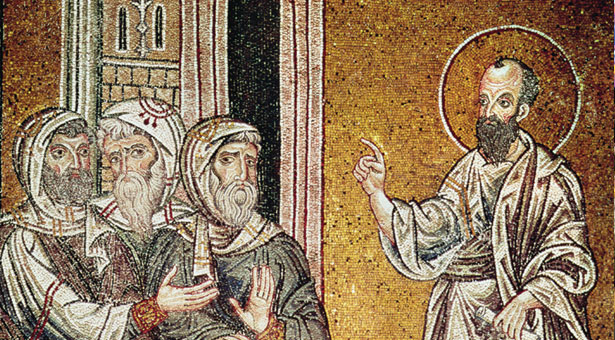
In the thirteenth chapter of the First Epistle to the Corinthians—preserved in the Apostolicon of the Testamentum—the Apostle Paul presents what may be the most profound and enduring insight in…
In the fourteenth chapter of the Apostle Paul's First Epistle to the Corinthians—preserved in the Apostolicon of the Testamentum—we are confronted with a powerful contrast that remains just as vital…
Marcion of Sinope, writing his renowned Epistle to the Magnesians in 154 C.E., addressed the Christian community at Magnesia concerning critical theological distinctions and innovations central to Christian practice. Among…
The Psalmicon is the earliest Christian hymnbook and an authorized ecclesiastical and liturgical book of the Marcionite Church. Its forty-two psalms give voice not only to theological instruction but also…
In examining the Homily to Diognetus, delivered by Marcion of Sinope, we uncover a profound indifference toward Jewish practices that distinguishes it from contemporary Christian writings. This notable disregard highlights…
In June 2008, the Congregation for Divine Worship quietly issued Prot. 213/08/L, a short letter that commanded every Roman-rite community to eliminate the name “Yahweh” from public worship. Bishops were…
The Marcionite Church proclaims the pure Evangelion and Apostolicon—the Gospel and Epistles of the Apostle Paul—a message of unmerited grace revealed by the True God through Jesus Christ. Any writing…
The Apostle Paul, singled out by the risen Lord, proclaims a gospel that descends from heaven itself and not from the legalistic traditions of the Hebrew Bible. Granted by revelation…
In the second chapter of his Epistle to the Romans, the Apostle Paul teaches that the judgment of God is according to truth. Neither possession of a written law nor…
In his Epistle to the Romans, chapter 4, the Apostle Paul offers a profound meditation on the nature of grace and hope—two cornerstones of Christian faith that must be cultivated…