


The Marcionite Church rejects the allegorical reading of the Hebrew Bible when it is employed as a means of evading the plain meaning of its laws, commands, judgments, and narratives. Allegory is a legitimate literary and exegetical category: Jesus teaches through parables and figurative speech, the Apostle Paul explicitly employs allegory, and ancient Marcionites themselves sometimes interpreted Christ’s sayings symbolically. What we reject is the use of allegory to transform the violence, law, and wrath of the Hebrew Scriptures into supposed hidden revelations of God the Father and His Gospel.
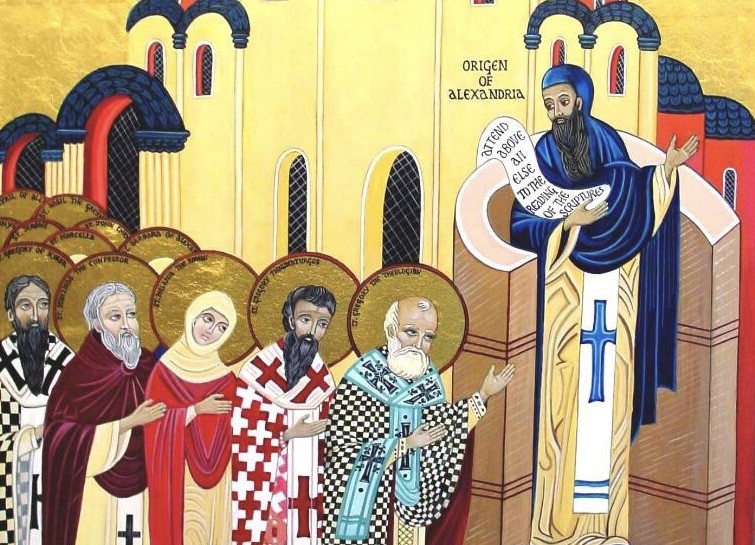
Rather than confront the contradiction between the lower deity portrayed in the Hebrew Scriptures and God the Father revealed by Jesus Christ, many early Church fathers resorted to increasingly elaborate allegorical readings. Such interpretation became a method of theological reconciliation, seeking beneath the plain meaning of troubling passages a supposedly Christian meaning that the words themselves did not express.
This is not legitimate figurative exegesis—it is evasion.
When Yahweh commands the slaughter of infants, the allegorist may insist that this points to spiritual warfare. When Yahweh sanctions slavery, it may be spiritualized into a metaphor for submission. When Yahweh demands burnt offerings, the interpreter may discover a hidden anticipation of Christian sacrifice.
But an allegorical application cannot erase the plain meaning of the text. Where the text describes an atrocity, figurative reinterpretation does not transform evil into good.
Worse still, allegorical reading without textual warrant enables eisegesis rather than exegesis. It allows the interpreter to impose meaning upon the text unconstrained by its actual content. This lack of restraint opens the door to error, abuse, and theological invention.
The Hebrew Bible thereby ceases to be read according to what its narratives, laws, and commands actually say and becomes a canvas upon which later interpreters may paint doctrines they wish to find. The literal and historical sense is displaced by meanings unavailable from the text itself.
What remains is not exegesis but speculation.
The Marcionite Tradition Was Not Absolutely Anti-Allegorical
This distinction is important because the ancient Marcionites did not reject every form of allegory, symbolism, metaphor, or figurative interpretation.
The Apostle Paul himself explicitly employs allegory. Of Sarah and Hagar he writes:
“Which things are an allegory: for these are the two expositions.”
Galatians 4:24
Paul therefore provides no basis for a rigid rule that every scriptural expression must always be interpreted literally. Rather, literary form and context govern interpretation: history as history, law as law, parable as parable, metaphor as metaphor, and allegory as allegory.
Ancient testimony shows that Marcionites followed the same distinction. Tertullian reports that Marcion interpreted Christ’s parable of the strong man as referring to the lower deity (Against Marcion V.6). The strong man is therefore not merely a human householder within the Marcionite reading; the image communicates a theological reality concerning the power from whose dominion Christ delivers mankind.
The same pattern appears elsewhere in ancient Marcionite exegesis. The good and corrupt trees were applied to the distinction between God the Father and the lower deity. The new wine and old bottles were applied to the distinction between Gospel and Law. These are unmistakably figurative readings.
Indeed, the Lord’s saying concerning the wine and bottles demonstrates the point:
“No man putteth new wine into old bottles.”
The new wine signifies the Gospel of God the Father; the old bottles signify the former Law. The saying is figurative, but its figurative meaning does not harmonize Gospel and Law. It establishes their incompatibility.
Marcionite exegesis therefore cannot accurately be described either as rigid literalism or as unrestricted allegory. It recognizes figurative meaning where Christ, Paul, literary form, or context warrants it while rejecting allegory when it becomes a means of overturning the plain meaning of the False Covenant.
Paul Does Not Allegorize the Law Away
The Apostle Paul, in the Apostolicon, may employ material allegorically without using allegory to rehabilitate the Law. This distinction is essential.
He calls the Law a yoke of bondage (Galatians 5:1), a ministration of death (II Corinthians 3:7), and a system of condemnation. Even when Paul employs figures drawn from the Hebrew scriptures, he does not thereby identify their deity with God the Father or transform the former covenant into the Gospel.
His most explicit allegory proves the point. Sarah and Hagar become figures of “two expositions,” but Paul’s conclusion is separation rather than harmonization: bondage is distinguished from liberty.
Paul’s figurative interpretation therefore serves the Gospel rather than subordinating the Gospel to the Hebrew scriptures. The Gospel governs the figure; the figure does not govern the Gospel.
The Plain Sense Still Matters
The Marcionite Church consequently maintains the importance of the grammatical, historical, and moral sense of a text.
When the Hebrew Bible presents Yahweh commanding slaughter, establishing servitude, demanding sacrifice, inflicting punishment, or acting in wrath, we do not invent a hidden Christian meaning in order to make those actions compatible with God the Father. We allow the testimony to stand.
This protects against eisegesis. Figurative interpretation must arise from the literary form, context, Christ’s teaching, the Apostle’s interpretation, or other legitimate exegetical grounds. It cannot simply be invoked whenever the plain meaning becomes theologically inconvenient.
This principle also explains an apparent tension within ancient Marcionite interpretation. Marcionites could interpret the strong man, the trees, and the wineskins figuratively while elsewhere insisting that an opponent was improperly escaping into simile or allegory. There is no contradiction. A genuinely figurative saying should be interpreted figuratively; a plain statement should not be converted into allegory merely to escape its consequences.
The Error Is Allegorical Harmonization
The fundamental Marcionite objection is therefore not to allegory as such. It is to allegorical harmonization.
God the Father, revealed through Jesus Christ, does not need the atrocities or judgments attributed to the lower deity transformed into riddles secretly pointing toward Him. His revelation does not depend upon discovering Christianity hidden beneath the False Covenant. He was previously unknown and is revealed through Jesus Christ.
Allegorical harmonization blurs that distinction. It can undermine the clarity of Scripture by cloaking plain commands beneath layers of imagined mystery and can place the ingenuity of the interpreter above the testimony of the text.
The problem is especially acute when allegory becomes an apologetic mechanism: whatever appears incompatible with God the Father is simply declared symbolic, while whatever appears compatible is retained literally. Such a method makes the interpreter rather than the text the final authority.
The early Catholic tradition increasingly employed allegorical and typological interpretation to establish continuity between the Hebrew Scriptures and Christianity. From a Marcionite perspective, this preserved precisely the continuity that Christ’s Gospel had overturned. Law became preparation for Gospel; wrath became hidden grace; sacrifice became prophecy; and the lower deity of the former covenant was identified with God the Father.
The Marcionite Church rejects that synthesis.
Neither Rigid Literalism Nor Unrestricted Allegory
The choice is therefore not between interpreting every word literally and interpreting everything allegorically.
We read the Hebrew Bible according to its plain historical and literary sense where it speaks plainly. We recognize metaphor, poetry, parable, symbolism, and other literary forms where they actually occur. But we do not use those devices to transform the lower deity into God the Father or the False Covenant into a hidden Gospel.
Likewise, we read the Testamentum according to its proper sense—literally where literal and figuratively where figurative. Jesus teaches in parables. Paul employs allegory. Ancient Marcionites interpreted the strong man, the trees, and the wineskins symbolically. None of this compromises the distinction between Gospel and Law.
Rather, properly governed figurative exegesis can reinforce that distinction.
The Marcionite Church therefore stands not against allegory itself, but against its abuse. We do not rescue the Hebrew Bible through metaphor. We confront its plain testimony and refuse to convert objectionable commands into Christian mysteries. We do not spiritualize Yahweh into God the Father. We distinguish them.
The Gospel needs no allegorical rehabilitation of the False Covenant to justify itself. It shines by its own light, revealing God the Father, previously unknown to the world, through the Lord Jesus Christ.
For Christ has said:
“No man putteth new wine into old bottles.”
We heed that word. The new wine is the Gospel of God the Father. The old bottles are the Law and the Prophets. The saying itself is figurative, and its meaning demonstrates the proper place of figurative exegesis: not to erase the distinction between the old and the new, but to reveal it.