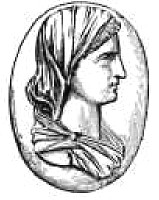

The Litourgicon is the liturgical service book of the Marcionite Church. Because no complete order of ancient Marcionite worship has survived, the forms contained herein are reconstructions and do not claim to reproduce, word for word, the services celebrated by Marcion or by every congregation of the early Marcionite Church.
The name Litourgicon is the Church’s Latinized form of the Greek leitourgikon, meaning “liturgical book” or “service book,” from leitourgia, the common worship and service of the Church. In this book, the word liturgy is reserved for the proclamation of the Word and the celebration of the Holy Mysteries. The word rite is used for the Church’s other sacred observances and for the constituent actions within a liturgy.
The Marcionite Church recognizes three Holy Mysteries: Holy Baptism, Holy Chrismation, and Holy Communion. A believer becomes fully initiated into the Church upon receiving all three. The Church also recognizes nine Holy Rites: Holy Reconciliation, Holy Matrimony, Holy Anointing, Holy Ordination, Holy Footwashing, Holy Veiling, the Holy Lovefeast, the Holy Kiss, and the Holy Sign.
The Litourgicon provides the liturgical forms ordinarily required for a believer to enter and complete initiation into the Marcionite Church. It contains the Liturgy of Holy Baptism, the Liturgy of Holy Chrismation, and the Divine Liturgy in which the newly baptized and chrismated receive Holy Communion. No separate rite of First Holy Communion is required. The Divine Liturgy also incorporates the Holy Footwashing, the Holy Kiss, the Holy Veiling, the rites of the Holy Lovefeast, and the Holy Sign. Together, these orders contain all three Holy Mysteries and five of the nine Holy Rites.
The Holy Mysteries are not received without repentance, faith, and confession. Holy Baptism is administered to those who repent and believe; Holy Chrismation seals the baptized with the earnest of the Spirit; and Holy Communion gives the faithful the body and blood of Christ. Repentance is therefore not numbered as a separate Holy Mystery in this Litourgicon, but is the necessary turning of the soul by which the faithful approach the Holy Mysteries in truth.
The fixed prayers, hymns, proclamations, and theological content of these liturgies and rites are drawn from, or closely arranged out of, the canonical Scriptures of the Marcionite Church—the Evangelicon and the Apostolicon—in order to keep the worship of the Church firmly Pauline. The few concise consecratory and ceremonial formulas express doctrines and practices grounded in those canonical texts and in established Marcionite tradition. The Psalmicon is not part of the canonical Scriptures, but serves as the Church’s authorized liturgical collection from which appointed psalms may be taken.
These forms are intentionally simple. They may be celebrated in a church, chapel, private home, or another suitable place, according to the requirements stated in their rubrics. They provide everything necessary for the proclamation of the Gospel and the Apostle, the offering of prayer and thanksgiving, the administration of Holy Baptism and Holy Chrismation, the celebration of the Eucharist, the reception of Holy Communion, and the observance of the Holy Rites contained herein without requiring an elaborate building, choir, or ceremonial establishment.
These orders should be regarded as basic forms and models rather than exhaustive limits upon Marcionite worship. Appropriate psalms from the Psalmicon, together with additional hymns, prayers, intercessions, readings from the Evangelicon or Apostolicon, and ceremonial actions, may be added according to the season, feast, needs of the local church, or local custom. On appointed commemorations, a supplementary reading from an authorized noncanonical book of the Church may be prescribed in addition to, but never in place of, the readings from the Evangelicon and the Apostolicon. Every addition shall remain consistent with the Evangelicon and the Apostolicon, accord with the teaching of the Marcionite Church concerning the Holy Mysteries and Holy Rites, and preserve the orderly and reverent character of Christian worship. Nothing should be added merely for ornament, novelty, or imitation of another tradition. Let all things be done unto edifying, and let all things be done decently and in order.
On the Feast of Marcion, Marcion’s Homily to Diognetus shall be read as the homily.
On August 24, after the appointed reading from the Apostolicon and before the Second Psalm, a reading from Marcion’s Epistle to the Romans in the Synaxicon shall be read, in addition to the appointed readings from the Evangelicon and the Apostolicon, commemorating its writing on that date, “the ninth day before the Kalends of September.”
During Holy Week and the days immediately following, the appointed reading from the Evangelicon shall correspond to the event commemorated on each day:
Holy Sunday — Jesus’ arrival in Jerusalem (Sunday, March 29, 33 C.E.).
Holy Monday — The Parable of the Minas (Monday, March 30, 33 C.E.).
Holy Tuesday — The cleansing of the Temple and Jesus’ response to the questioning of his authority (Tuesday, March 31, 33 C.E.).
Spy Wednesday — The betrayal of Jesus by Judas (Wednesday, April 1, 33 C.E.).
Holy Thursday — The Last Supper (Thursday, April 2, 33 C.E.).
Good Friday — The Crucifixion of Jesus (Friday, April 3, 33 C.E.).
Black Saturday — Jesus laid in the sepulcher (Saturday, April 4, 33 C.E.).
Easter Sunday — The Resurrection (Sunday, April 5, 33 C.E.).
Ascension Monday — Jesus’ Ascension (Monday, April 6, 33 C.E.).
On Christmas, the appointed reading from the Evangelicon shall be taken from the material in chapter 2 describing the descent of Jesus and the immediate beginning of his ministry.
THE DIVINE LITURGY
THE PREPARATION FOR THE DIVINE LITURGY
The Divine Liturgy is ordinarily celebrated on the Lord’s Day by a celebrant.
The Divine Liturgy may be celebrated in a church, chapel, or private home wherever a celebrant and at least two communicants are gathered.
In these rubrics, “the celebrant” means the bishop or presbyter presiding at the Divine Liturgy. “The communicants” means the fully initiated Christians admitted to participate in the rite and receive Holy Communion.
The Fast and the Ritual Preparation
At the ninth hour on Saturday, the celebrant and the communicants recite the Lord’s Prayer three times. The Eucharistic fast begins after the third recitation and continues until they receive Holy Communion on Sunday.
Before the Divine Liturgy, the celebrant and the communicants wash their hands and faces.
The Holy Footwashing
The celebrant washes the feet of the communicants. The communicants may also wash one another’s feet.
The Holy Veiling
Men worship with their heads uncovered. Women cover their heads during the Divine Liturgy and whenever they pray or prophesy.
The Posture and Language of the Celebrant and the Communicants
The Divine Liturgy is celebrated using a language understood by the communicants.
The celebrant and the communicants pray facing west. When space permits, they stand with their arms extended in prayer.
At every mention of the name Jesus, the celebrant and the communicants bow their heads.
The Preparation of the Bread and the Chalice
Whenever possible, one loaf should be prepared upon the holy table. If pastoral need requires more than one loaf, no more than five loaves may be prepared.
The holy table may be covered with a clean veil until the Presentation of the Gifts. Nothing common or unclean should be placed upon it.
The celebrant prepares either leavened or unleavened bread upon the holy table.
The celebrant prepares a chalice of wine mixed with a few drops of water, recalling the blood and water that came forth from the side of the Lord.
I. THE INTRODUCTORY RITES
The Holy Sign
The celebrant and the communicants make the Sign of the Cross.
The first three fingers are joined together in confession of the Father, the Son, and the Holy Spirit. The remaining two fingers are folded into the palm in confession of the twofold nature of Christ.
The right hand is moved from the forehead to beneath the breast, then from the left shoulder to the right shoulder, and finally placed over the heart with a bow of the head.
The celebrant and the communicants say:
In the name of the Father, and of the Son, and of the Holy Spirit. Amen.
The Opening Proclamation
Celebrant:
Awake thou that sleepest, and arise from the dead, and Christ shall give thee light.
Now unto God and our Father be glory for ever and ever.
Communicants:
Amen.
The Hymn of Christ
The celebrant and the communicants kneel and sing:
Who, being in the form of God,
Thought it not robbery to be equal with God:
But made himself of no reputation,
And took upon him the form of a servant,
And was made in the likeness of men:
And being found in fashion as a man,
He humbled himself,
And became obedient unto death,
Even the death of the cross.
Wherefore God also hath highly exalted him,
And given him a name which is above every name:
That at the name of Jesus every knee should bow,
Of things in heaven,
And things in earth,
And things under the earth;
And that every tongue should confess
That Jesus Christ is Lord,
To the glory of God the Father.
Amen.
II. THE LITURGY OF THE WORD
The Pauline Blessings
The communicants stand. The celebrant extends his arms and says:
Now the God of patience and consolation grant you to be likeminded one toward another according to Christ Jesus; that ye may with one mind and one mouth glorify God, even the Father of our Lord Jesus Christ.
Now the God of hope fill you with all joy and peace in believing, that ye may abound in hope through the power of the Holy Spirit.
The God of peace be with you all; and the God of peace shall bruise Satan under your feet shortly.
The grace of our Lord Jesus Christ be with you.
Communicants:
And with thy spirit. Amen.
The Reading from the Gospel
The communicants sit.
Celebrant:
Let us attend unto the holy Gospel of our Lord Jesus Christ.
The appointed passage from the Evangelicon is read.
At the conclusion:
Celebrant:
The Gospel of the Lord.
Communicants:
Praise be to thee, O Lord Jesus Christ.
The First Psalm
The celebrant and the communicants sing or read an appointed psalm from the Psalmicon responsorially.
The Reading from the Apostle
Celebrant:
Let us attend unto the words of the Apostle Paul.
The appointed passage is read from one of the following books of the Apostolicon: Galatians, I Corinthians, II Corinthians, Romans, I Thessalonians, II Thessalonians, Laodiceans, Colossians, Philippians, or Philemon.
At the conclusion:
Celebrant:
The word of the Apostle.
Communicants:
Thanks be unto God.
The Second Psalm
The celebrant and the communicants sing or read an appointed psalm from the Psalmicon responsorially.
The Homily
The celebrant gives a homily based upon the readings and applies them to the faith and life of the Church and to the needs and circumstances of the communicants.
The Intercessions
Intercessions may be offered that are consistent with the Evangelicon and the Apostolicon, and with the needs of the Church.
Celebrant:
Let us make our requests known unto God with prayer, supplication, and thanksgiving.
For the Marcionite Church, for her bishops and presbyters, for all communicants, and for all who preach the Gospel of Christ:
Communicants:
O God our Father, hear our prayer.
Celebrant:
For rulers and all who bear authority, that they may do that which is good, and that peace may abound among all men:
Communicants:
O God our Father, hear our prayer.
Celebrant:
For the sick, the afflicted, the poor, the imprisoned, and all who suffer in body or soul:
Communicants:
O God our Father, hear our prayer.
Celebrant:
For all communicants, that they may be strengthened by the Holy Spirit, and may abound in faith, hope, and charity:
Communicants:
O God our Father, hear our prayer.
Celebrant:
O God our Father, who art able to do exceeding abundantly above all that we ask or think, receive these prayers through Jesus Christ our Lord.
Communicants:
Amen.
III. THE OFFERTORY RITES
The Admission to the Holy Table
The Marcionite Church practices open communion. Christians who have received Holy Baptism by full triple immersion in the name of the Father, and of the Son, and of the Holy Spirit, and who have received Holy Chrismation or Confirmation and admission to Holy Communion, may be received as communicants, even if they are not formal members of the Marcionite Church.
Open communion does not mean reception without Baptism, without sealing, without faith, or without admission to the holy table. Catechumens, non-Christians, the unbaptized, the unchrismated, and all others not admitted to Holy Communion may hear the Gospel, the Apostle, the psalms, the homily, and the intercessions, but shall not receive the Holy Mysteries.
The Pauline Creed
The celebrant and the communicants stand.
Celebrant:
Let us attend and confess the faith delivered by the Apostle.
The celebrant and the communicants say:
But to us there is but one God, the Father,
Of whom are all things, and we in him;
And one Lord Jesus Christ,
By whom are all things, and we by him.
And no man can say that Jesus is the Lord,
But by the Holy Spirit.
Amen.
The Holy Kiss
Celebrant:
Let us salute one another with an holy kiss.
The celebrant and the communicants exchange the Holy Kiss with those nearest to them, reverently kissing one another on the cheek.
The Presentation of the Gifts
The celebrant presents the bread and mixed chalice upon the holy table.
Offerings for the Holy Lovefeast and the relief of the poor may also be presented.
Celebrant:
Behold the table of holiness, prepared for the faithful and beloved of the Lord.
Communicants:
We draw near in faith, repentance, hope, and love.
IV. THE LITURGY OF THE EUCHARIST
The Great Thanksgiving
Celebrant:
The Lord be with you.
Communicants:
And with thy spirit.
Celebrant:
Lift up your hearts.
Communicants:
We lift them up unto the Lord.
Celebrant:
Let us give thanks unto the Lord our God.
Communicants:
It is meet and right so to do.
The Thanksgiving for Salvation in Christ
The celebrant extends his arms and says:
We give thanks unto God and the Father of our Lord Jesus Christ, who hath made us meet to be partakers of the inheritance of the saints in light;
Who hath delivered us from the power of darkness, and hath translated us into the kingdom of his dear Son;
In whom we have redemption through his blood, even the forgiveness of sins.
He is the image of the invisible God, the firstborn of every creature: for by him were all things created that are in heaven and invisible, whether they be thrones, or dominions, or principalities, or powers.
And he is before all things, and by him all things consist.
For it pleased the Father that in him should all fulness dwell; and, having made peace through the blood of his cross, by him to reconcile all things unto himself.
For God was in Christ, reconciling the world unto himself, not imputing their trespasses unto them.
He gave himself for our sins, that he might deliver us from this present evil world, according to the will of God and our Father.
Christ died for our sins, and was buried, and rose again the third day.
Therefore we give thanks unto thee, O God our Father, through Jesus Christ our Lord.
The Words over the Bread and the Chalice
The celebrant takes the bread and says:
Giving thanks unto thee, he blessed it, brake it, and gave it unto his disciples, saying:
This is my body, which is given for you. This do in remembrance of me.
Communicants:
Amen.
The celebrant takes the chalice and says:
Likewise also, after supper, he took the cup, wherein wine and water were mingled; and when he had given thanks, he gave it unto them, saying:
This cup is the testament in my blood, which is shed for you. This do in remembrance of me.
For as often as ye eat this bread, and drink this cup, ye do shew the Lord’s death till he come.
Communicants:
Amen.
The Memorial and the Thanksgiving Offering
Celebrant:
Wherefore, calling to remembrance his death and resurrection, we present before thee this bread and this chalice in thanksgiving.
Thou also hast made us able ministers of the new testament; not of the letter, but of the spirit.
The Invocation of the Holy Spirit
The celebrant bows over the bread and the chalice.
Celebrant:
O God our Father, who stablishest us in Christ, and hast anointed us, who hast also sealed us, and given the earnest of the Spirit in our hearts:
Send down thy Holy Spirit upon us and upon these gifts set before thee in thanksgiving.
Sanctify this bread, and make it the holy body of thy Christ.
Communicants:
Amen.
Celebrant:
And make this cup the precious blood of thy Christ.
Communicants:
Amen.
Celebrant:
Grant that the cup of blessing which we bless may be unto us the communion of the blood of Christ, and that the bread which we break may be unto us the communion of the body of Christ.
Unite us by thy Holy Spirit; for we, being many, are one bread and one body, being all partakers of that one bread.
Fill us with thy Spirit, strengthen us in faith, and establish us in the truth.
For all things are of thee, who hast reconciled us to thyself by Jesus Christ.
Unto thee be glory through Jesus Christ, in the Holy Spirit, now and ever, and unto all ages.
Communicants:
Amen.
V. THE COMMUNION RITES
The Lord’s Prayer
The celebrant and the communicants make the Sign of the Cross.
Celebrant:
As children of God, and as those who have received the Spirit of adoption, let us pray in the words which the Lord delivered unto us.
The celebrant and the communicants say:
Our Father which art in heaven, Hallowed be thy name.
Let thy Holy Spirit come upon us, and cleanse us.
Thy kingdom come.
Thy will be done, as in heaven, so in earth.
Give us day by day thy daily bread.
And forgive us our sins; for we also forgive every one that is in-debted to us.
And suffer us not to be brought into temptation, but deliver us from evil.
Amen.
The celebrant and the communicants make the Sign of the Cross.
The Breaking of the Bread
The celebrant breaks the consecrated bread into portions for the communicants.
The Communion Proclamation
The celebrant takes the chalice and says:
Celebrant:
The cup of blessing which we bless, is it not the communion of the blood of Christ?
The celebrant takes the broken bread and says:
Celebrant:
The bread which we break, is it not the communion of the body of Christ?
Communicants:
For we being many are one bread, and one body: for we are all partakers of that one bread. Amen.
The Examination before Communion
Celebrant:
Let us draw near in fear, with care, and with right confession of faith, discerning the body and blood of the Lord.
Let no man eat of this bread, nor drink of this cup, without examining himself before God.
The celebrant and the communicants keep a brief silence, examining themselves before God.
The Warning before Communion
The celebrant says:
Beloved, discern the body and blood of the Lord. These gifts are not common bread and common drink, but the communion of the body and blood of Jesus Christ.
Let every communicant receive in faith, repentance, thanksgiving, and love.
A brief silence is kept.
Celebrant:
The holy things are for the holy.
Communicants:
One is holy, one is Lord, Jesus Christ, to the glory of God the Father. Amen.
The Communion of the Celebrant
The celebrant makes the Sign of the Cross before receiving the consecrated body and blood of Christ.
The celebrant first receives the consecrated body and blood of Christ.
After receiving, the celebrant makes the Sign of the Cross.
The Communion of the Communicants
Before approaching the celebrant, each communicant makes the Sign of the Cross. The communicants then approach in order, and each communicant kneels before the celebrant.
The celebrant dips a portion of the consecrated bread in the chalice and places it directly upon the communicant’s tongue.
The celebrant says to each communicant:
Celebrant:
The body of Christ, given for thee, and the blood of Christ, shed for thee.
Communicant:
Amen.
After receiving, each communicant makes the Sign of the Cross and reverently returns to his or her place.
The Consuming of the Holy Gifts
The celebrant reverently consumes all that remains of the consecrated body and blood of Christ. None shall be discarded or used for any common purpose.
The celebrant cleanses the chalice with water and consumes the cleansing water. The holy table and vessels are left clean and orderly.
VI. THE CONCLUDING RITES
The Thanksgiving after Communion
The celebrant and the communicants stand.
Celebrant:
Giving thanks unto the Father, who hath made us meet to be partakers of the inheritance of the saints in light;
Who hath delivered us from the power of darkness, and hath translated us into the kingdom of his dear Son;
In whom we have redemption through his blood, even the forgiveness of sins.
As ye have therefore received Christ Jesus the Lord, so walk ye in him:
Communicants:
Rooted and built up in him, and stablished in the faith, as we have been taught, abounding therein with thanksgiving.
Celebrant:
May ye be filled with the knowledge of his will in all wisdom and spiritual understanding;
That ye might walk worthy of the Lord unto all pleasing, being fruitful in every good work, and increasing in the knowledge of God;
Strengthened with all might, according to his glorious power, unto all patience and longsuffering with joyfulness.
Communicants:
Amen.
Celebrant:
May the peace of God, which passeth all understanding, keep your hearts and minds through Christ Jesus.
And may God supply all your need according to his riches in glory by Christ Jesus.
Now unto God and our Father be glory for ever and ever.
Communicants:
Amen.
The Hymn of Victory
The celebrant and the communicants sing:
Death is swallowed up in victory.
O death, where is thy sting?
O grave, where is thy victory?
The sting of death is sin;
And the strength of sin is the law.
But thanks be to God,
Which giveth us the victory
Through our Lord Jesus Christ.
Amen.
The Prayer for Sanctification and Perseverance
Celebrant:
And the very God of peace sanctify you wholly;
And I pray God your whole spirit and soul and body be preserved blameless unto the coming of our Lord and Saviour Jesus Christ.
Faithful is he that calleth you, who also will do it.
Communicants:
Amen.
The Blessing
Celebrant:
The grace of our Lord Jesus Christ, and the love of God the Father, and the communion of the Holy Spirit, be with you all.
Communicants:
And with thy spirit.
The Dismissal
Celebrant:
Watch ye, stand fast in the faith, be strong. Let all your things be done with charity.
Go forth in peace, continuing steadfastly in faith, hope, and charity.
Communicants:
Thanks be unto God.
The celebrant and the communicants make the Sign of the Cross.
The celebrant and the communicants say:
In the name of the Father, and of the Son, and of the Holy Spirit. Amen.
VII. THE RITES OF THE HOLY LOVEFEAST
Following the Concluding Rites, the celebrant and the communicants participate in the Holy Lovefeast, a sacred communal meal and a Holy Rite.
Each household or communicant contributes according to ability. The food is gathered and shared without preference for the wealthy over the poor. No one begins before the others are ready, but all wait for one another.
The Blessing of the Holy Lovefeast
Before the meal, the celebrant and the communicants make the Sign of the Cross.
Celebrant:
The Lord be with you.
Communicants:
And with thy spirit.
Celebrant:
Let us give thanks unto God.
O God our Father, we give thee thanks for this food and for the fellowship of thy holy Church.
Grant that we, being many, may be one bread and one body in Christ; that we may tarry one for another; and that none may hunger while another hath abundance.
Through Jesus Christ our Lord.
Communicants:
Amen.
The Sharing of the Holy Lovefeast
The celebrant and the communicants share the meal in charity and peace.
The Distribution to Absent Communicants
A portion of the Holy Lovefeast meal shall be reserved for an absent communicant who could not attend because of sickness or infirmity. When appropriate, a portion may also be reserved because of imprisonment, distance, or another serious necessity.
This distribution concerns the Holy Lovefeast meal only. The consecrated body and blood of Christ are not reserved, carried away, or used for any common purpose.
The celebrant or a communicant appointed by the celebrant may carry it to that person as a sign that he or she remains joined to the fellowship of the Church.
The Conclusion of the Holy Lovefeast
Celebrant:
Whether therefore ye eat, or drink, or whatsoever ye do, do all to the glory of God.
Communicants:
Amen.
THE LITURGY OF HOLY BAPTISM
The Preparation for Holy Baptism
Holy Baptism is especially fitting on the Marcionite Holy Days, especially Christmas, Hallowmas, and Easter Sunday. It may also be administered at any fitting time when a catechumen is prepared, repentant, and ready to confess Jesus Christ as Lord.
Holy Baptism should ordinarily be administered before the congregation, or before sufficient witnesses of the Church, so that the catechumen’s repentance, confession, and baptism may be openly testified.
Holy Baptism is administered only to a catechumen capable of repentance, faith, and personal confession. Infant baptism is not practiced.
The catechumen fasts for the full day preceding Holy Baptism, unless prevented by sickness or another serious necessity. The catechumen’s Christian name should be spoken aloud before the baptism.
A font, pool, or body of clean water sufficient for three full immersions is prepared. The celebrant is ordinarily a bishop, presbyter, or deacon. A deaconess may baptize a woman.
Holy Baptism is followed without delay by Holy Chrismation, unless grave necessity prevents it. The ancient post-baptismal anointing and the offering of milk and honey are administered in the Liturgy of Holy Chrismation.
Whenever possible, Holy Baptism and Holy Chrismation are celebrated immediately before the Divine Liturgy, so that the newly chrismated may receive Holy Communion without delay and complete initiation into the Church.
The Examination of the Catechumen
The catechumen should not be baptized hastily. Before Holy Baptism, the celebrant should examine the catechumen concerning faith, repentance, confession of Jesus Christ as Lord, and readiness to walk in newness of life.
If the catechumen is not yet prepared, the celebrant should delay Holy Baptism and continue instruction.
Celebrant:
Hast thou been taught the Gospel revealed by Christ and preached by Paul?
Catechumen:
I have been taught.
The Free Desire of the Catechumen
The catechumen shall come freely and shall not be compelled. The celebrant asks:
Celebrant:
What dost thou seek?
Catechumen:
I seek Holy Baptism, that I may confess Jesus Christ as Lord, receive the grace of God the Father, and walk in newness of life.
The Fruit of Repentance
Celebrant:
What fruit of repentance dost thou bring before God and his Church?
Catechumen:
I turn from sin, from the god of this world, and from the bondage of the elements. I confess Jesus Christ as Lord, and I seek the grace of God the Father, that I may walk in faith, hope, love, and newness of life.
Celebrant:
Wilt thou continue in the Gospel revealed by Christ and preached by Paul, holding fast the faith once delivered unto the Church?
Catechumen:
I will, God helping me.
The Holy Sign
The celebrant and the catechumen make the Sign of the Cross according to the form prescribed in the Divine Liturgy.
The Renunciation, Repentance, and Confession of Faith
Celebrant:
Godly sorrow worketh repentance to salvation not to be repented of. Dost thou repent of thy sins and turn unto God the Father through Jesus Christ?
Catechumen:
I do.
Celebrant:
Dost thou renounce the god of this world, his works, his dominion, and every bondage of sin?
Catechumen:
I renounce them.
Celebrant:
Dost thou turn from the elements of this world unto God the Father revealed by Jesus Christ?
Catechumen:
I do.
Celebrant:
Dost thou believe in God the Father, revealed through Jesus Christ?
Catechumen:
I believe.
Celebrant:
Dost thou confess Jesus Christ as Lord, who descended, suffered, died, was buried, rose again, and appeared to Paul?
Catechumen:
I confess Jesus Christ as Lord.
Celebrant:
Dost thou receive the Gospel revealed by Christ and preached by Paul?
Catechumen:
I receive it.
Celebrant:
Dost thou believe in the Holy Spirit, by whom we are all baptized into one body?
Catechumen:
I believe.
Celebrant:
Dost thou desire Holy Baptism, Holy Chrismation, and Holy Communion in the Church of Christ?
Catechumen:
I desire them.
The Prayer over the Water
The celebrant extends his hand over the water and says:
Celebrant:
O God our Father, who hast delivered us from the power of darkness, and hast translated us into the kingdom of thy dear Son: grant that this water may be unto this thy servant a burial with Christ into death, and a rising with him through faith of thine operation, who didst raise him from the dead.
Through Jesus Christ our Lord.
Catechumen and those present:
Amen.
The Triple Immersion
The catechumen enters the water. The celebrant calls the catechumen by name and immerses the catechumen fully three times.
At the first immersion, the celebrant says:
Celebrant:
I baptize thee in the name of the Father;
At the second immersion, the celebrant says:
Celebrant:
And of the Son;
At the third immersion, the celebrant says:
Celebrant:
And of the Holy Spirit. Amen.
The newly baptized is raised from the water.
The Lord’s Prayer and the Peace
The celebrant and all present say:
Our Father which art in heaven, Hallowed be thy name.
Let thy Holy Spirit come upon us, and cleanse us.
Thy kingdom come.
Thy will be done, as in heaven, so in earth.
Give us day by day thy daily bread.
And forgive us our sins; for we also forgive every one that is in-debted to us.
And suffer us not to be brought into temptation, but deliver us from evil.
Amen.
The celebrant says to the newly baptized:
The peace of God the Father, the peace of Jesus Christ his Son, and the peace of the Holy Spirit be with thee.
Newly Baptized:
Amen.
The Proclamation of New Life
Celebrant:
Knowest thou not, that as many of us as were baptized into Jesus Christ were baptized into his death?
Therefore thou art buried with him by baptism into death: that like as Christ was raised up from the dead by the glory of the Father, even so thou also shouldest walk in newness of life.
Buried with him in baptism, thou art also risen with him through the faith of the operation of God, who hath raised him from the dead.
As many as have been baptized into Christ have put on Christ.
Newly Baptized:
Amen.
Holy Chrismation follows immediately.
THE LITURGY OF HOLY CHRISMATION
The Preparation for Holy Chrismation
Holy Chrismation ordinarily follows Holy Baptism immediately. It may also be administered separately to a believer whose previous Trinitarian credobaptism through three full immersions has been received as valid by the Church.
The celebrant is a bishop or presbyter. A vessel of holy oil and a small cup containing milk mixed with honey are prepared.
The anointing with holy oil in Holy Chrismation belongs to the sealing of initiation and is distinct from Holy Anointing, the separate Holy Rite administered to the sick.
The Laying on of Hands
The newly baptized or candidate kneels. The celebrant lays his right hand upon the head and says:
Celebrant:
Now he which stablisheth us in Christ, and hath anointed us, is God; who hath also sealed us, and given the earnest of the Spirit in our hearts.
O God our Father, because this thy servant is thy child, send forth the Spirit of thy Son into the heart of this thy servant, crying, Abba, Father.
Strengthen thy servant with might by thy Spirit in the inward man, that Christ may dwell in the heart by faith.
Through Jesus Christ our Lord.
Candidate and those present:
Amen.
The Anointing with Oil
The celebrant anoints the forehead of the candidate with holy oil in the form of the Cross and says:
Celebrant:
God hath anointed thee, and hath also sealed thee, and given the earnest of the Spirit in thine heart.
Newly Chrismated:
Amen.
Celebrant:
For by one Spirit are we all baptized into one body, and have been all made to drink into one Spirit.
Newly Chrismated:
Jesus Christ is Lord.
Celebrant:
Thou hast received the Spirit of adoption, whereby we cry, Abba, Father. Walk therefore as a child of God, sealed in Christ, and filled with the earnest of the Spirit.
Newly Chrismated:
Amen.
The Milk and Honey
The celebrant gives the newly chrismated the cup of milk and honey and says:
Celebrant:
As thou hast therefore received Christ Jesus the Lord, so walk thou in him: rooted and built up in him, and stablished in the faith, abounding therein with thanksgiving.
The newly chrismated drinks from the cup.
Celebrant:
Thou art Christ’s; and Christ is God’s.
Newly Chrismated:
Amen.
The Admission to Holy Communion
Celebrant:
Wherefore thou art no more a servant, but a child; and if a child, then an heir of God through Christ.
Newly Chrismated:
Amen.
The newly chrismated is admitted to Holy Communion. Upon receiving Holy Baptism, Holy Chrismation, and Holy Communion, the believer is fully initiated into the Marcionite Church. No separate rite of First Holy Communion is used.
Whenever possible, the Divine Liturgy follows immediately, and the newly chrismated receives Holy Communion therein. When this is impossible, Holy Communion is received at the next Divine Liturgy.
The Blessing
Celebrant:
The grace of our Lord Jesus Christ be with thy spirit.
Newly Chrismated:
Amen.
Here endeth the Litourgicon.