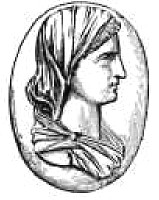


Apelles of Alexandria composed a major work entitled the Syllogisms, a sustained examination and refutation of the Law and the Prophets. The work extended to at least thirty-eight books, but the books themselves have been lost. What survives is only a collection of fragments preserved principally by ancient Christian writers who sought to answer them, together with other ancient arguments whose Apellean origin has subsequently been recognized.
The surviving testimony leaves little doubt about Apelles’ judgment of the Hebrew Scriptures. He did not regard their contradictions, failed prophecies, and unworthy representations of deity as mysteries that Christians were obligated to reconcile. He regarded them as evidence against the writings themselves.
Rhodo, who personally disputed with the aged Apelles, preserves his judgment of the prophecies:
“The prophecies refuted themselves, because they have said nothing true; for they are inconsistent, and false, and self-contradictory.”
Ancient Witness: Rhodo, preserved in Eusebius, Ecclesiastical History 5.13.6.
This was not an incidental criticism. Eusebius reports that Apelles wrote extensively against the Law of Moses and devoted himself to its refutation and overthrow. The surviving Syllogisms show how he carried out that refutation.
Apelles does not begin by assuming that everything attributed to the so-called god of the Hebrew Scriptures must be worthy of God the Father. He does the opposite. He examines what the Law and Prophets actually say about their god and follows those claims to their logical consequences.
The distinction is fundamental. God the Father is the Good, revealed by Jesus Christ. The god portrayed in the Law and Prophets is not therefore entitled to the attributes of the Father merely because the Hebrew Scriptures call him God. His words and actions must themselves be examined.
The Syllogisms expose two possibilities. Where the scriptural account truly describes the deity responsible for the acts it records, the qualities disclosed by those acts demonstrate that this deity is inferior to God the Father and cannot be identified with Him. But where the account attributes impossibilities, contradictions, falsehoods, or fictitious events to deity, the fault lies in the writing itself. Such a writing cannot have proceeded from God.
Apelles therefore attacks both the identification of the god of the Hebrew Scriptures with God the Father and the claim of the Hebrew Scriptures to divine inspiration. Their god is not the Father merely because they call him God; their writings are not divine merely because they claim to speak of God.
This conclusion is expressed within the surviving Syllogisms themselves. When Apelles finds an account logically incompatible with the nature of God, the argument concludes: “Therefore the Scripture is not from God.” When the narrative itself proves impossible, the conclusion is still more direct: “It is manifest therefore that the tale is feigned.”
Thus the Hebrew Scriptures are not a revelation from God the Father requiring Christian reconciliation. Where they preserve the acts of an inferior creator or ruler, they testify concerning one who is not the Good Father; where they falsely elevate their narratives into divine revelation, they are exposed as human fiction.
The Christian therefore does not diminish the goodness, foreknowledge, justice, or perfection of God the Father in order to vindicate Moses. The Father judges the scripture; the scripture does not judge the Father.
Only fragments of this great work survive. The collection below does not pretend to reconstruct its lost thirty-eight or more books. Every recovered fragment consists of words preserved in an ancient witness, recension, translation, or parallel transmission. Modern scholarship may identify anonymously preserved ancient material as Apellean, but it cannot supply words that the ancient record has lost.
What follows is therefore not a recreation of the Syllogisms, but the surviving remnant of Apelles’ great refutation of the Hebrew Scriptures.
The Method of Apelles
The Syllogisms proceed by dialectical argument.
Apelles begins with a claim made by the Law or Prophets concerning their so-called god, creation, humanity, judgment, prophecy, or another matter. He accepts the premises of the claim for the purpose of argument and determines what logically follows from them.
The method commonly takes the form of a dilemma. If a scriptural claim permits two possible explanations, Apelles examines both. If the first entails an absurdity, contradiction, injustice, or defect in the deity described by the text, that consequence counts against it. If the alternative produces a different but equally unacceptable consequence, the scriptural claim has failed under its own premises.
Other arguments proceed by internal contradiction. One proposition in the Hebrew Scriptures is placed against another and the two are tested for consistency. Still others proceed from consequences: if a narrative is true, certain things must also be true; if those consequences are impossible or contradictory, the credibility of the narrative itself is undermined.
The reasoning therefore moves from premise, to consequence, to contradiction, to conclusion. But the conclusion can operate at two different levels.
In one form, the argument establishes the inferiority of the deity described by the text. If the creator acts ignorantly, weakly, unjustly, or imperfectly, then the being so described cannot be God the Father, who is perfectly Good.
In the other form, the argument establishes the falsehood of the text itself. If the narrative is impossible, self-contradictory, or falsely attributes unworthy things to God, then its claim to divine authority collapses. The writing is not inspired by God but is a human fabrication—a tale “feigned,” as the surviving words attributed to Apelles themselves declare.
These conclusions are complementary rather than contradictory. A passage may preserve a tradition concerning an inferior creator; another may simply speak falsely. In neither case is the Christian required to identify the deity of the Hebrew Scriptures with God the Father or to receive the Hebrew Scriptures as His inspired revelation.
This distinction is essential to understanding Apelles. The Syllogisms do not put God the Father on trial. They put the Law and Prophets, their representations of their so-called god, and their claim to divine authority on trial before the truth revealed in Jesus Christ.
SYLLOGISM ONE
If God made man not perfect, and every man by his own diligence acquireth unto himself the perfection of virtue, doth not man seem to acquire more unto himself than God bestowed upon him?
Ancient Witness: Ambrose, De Paradiso 5.28.
Exposition
Apelles begins with the perfection of the creator’s work. If humanity was made imperfect and must later acquire moral perfection through its own effort, then the perfected human being has acquired something that the creator did not originally give him.
The argument therefore concerns more than human moral development. It asks what an imperfect creation implies about its maker. If the account accurately represents its creator, then the creator revealed by it is deficient in a manner that cannot be attributed to God the Father.
The dilemma consequently opens the distinction between the creator described by Genesis and the perfect Father revealed by Christ. The imperfection of the work cannot be transferred upward and made an imperfection in God the Father.
SYLLOGISM TWO
How doth the tree of life seem to work more unto life than the breath of God?
Ancient Witness: Ambrose, De Paradiso 5.28.
Exposition
Genesis says that the creator’s breath gave life to man. Yet the tree of life subsequently appears to possess a power by which that life could be preserved indefinitely.
Apelles asks which power is greater. If the breath of the creator gave Adam life, how can the fruit of a created tree exercise a greater power over that life?
If the account is taken according to its own terms, its creator appears unable by his own breath to secure the life that a tree can preserve. Such a limitation cannot belong to God the Father. Either the narrative has represented its own creator as inferior, or the representation itself is false.
SYLLOGISM THREE
If man had not tasted death, that which he had not tasted he could not know. Therefore, if he had not tasted it, he knew it not; if he knew it not, he could not fear it. In vain therefore did God set death before him for a terror, which men feared not.
Ancient Witness: Ambrose, De Paradiso 5.28.
Exposition
A threat can deter only someone who understands what is being threatened.
Adam had never experienced death. Apelles therefore asks how death could function as an intelligible warning to him. If Adam did not know what death was, he could not fear it in the manner required for the threat to deter him.
The problem falls upon the deity portrayed by the narrative. He threatens a man with something the man cannot understand and thereby issues a threat incapable of accomplishing its apparent purpose.
Such vanity cannot be attributed to the perfect wisdom of God the Father. Either Genesis has disclosed an inferior lawgiver, or its representation of deity is false.
SYLLOGISM FOUR
It is not always evil not to obey a commandment. For if the commandment be good, obedience is honourable; but if the commandment be evil, not to obey is profitable. Therefore it is not always evil not to obey a commandment. But the tree which worketh the knowledge of good and evil is good, seeing that God knoweth good and evil. For he saith, Behold, Adam is become as one of us. If therefore it be good to have the knowledge of good and evil, and good is that knowledge which God hath, he who forbiddeth it unto men seemeth not rightly to forbid it.
Ancient Witness: Ambrose, De Paradiso 6.30.
Exposition
Here Apelles establishes an important principle: obedience is not good merely because it is obedience.
If a commandment is good, obedience to it is good. If a commandment is evil, obeying it cannot transform evil into good. The moral quality of the command therefore comes before the moral quality of obedience.
Apelles then turns Genesis against itself. The knowledge of good and evil cannot simply be evil, because the deity of the narrative later says, “Behold, Adam is become as one of us.” The very knowledge forbidden to humanity is acknowledged as something possessed by the divine beings of the narrative.
The problem is therefore not resolved merely by insisting upon the authority of the command. If the command is itself contrary to the Good, its giver cannot be identified with God the Father merely because Genesis calls him God.
God the Father is the measure of Goodness; the commandment of the creator is not the measure of God the Father.
SYLLOGISM FIVE
He who knoweth not good and evil differeth nothing from a little child. But a little child hath no guilt before a just judge. A just maker of the world would never have accused a little child of guilt because he knew not good and evil; for a little child is without the crime of transgression and guilt.
Ancient Witness: Ambrose, De Paradiso 6.31.
Exposition
Justice requires knowledge.
Before Adam ate from the tree, according to Genesis, he did not possess the knowledge of good and evil. Apelles therefore compares him to a child.
A just judge does not condemn a child as though the child possessed mature moral understanding. How, then, can the creator condemn Adam for choosing evil before Adam possesses the knowledge by which good and evil can be distinguished?
If Genesis accurately represents its judge, that judge acts beneath the standard of perfect justice. Such injustice cannot be transferred to God the Father.
The Good Father does not condemn ignorance as though it were deliberate wickedness.
SYLLOGISM SIX
He who knoweth not good and evil knoweth not even that it is evil not to keep the commandment, neither knoweth he that it is good to obey the commandment. Therefore, because he knew it not, he who obeyed not was worthy of pardon, not condemnation.
Ancient Witness: Ambrose, De Paradiso 6.32.
Exposition
Apelles now makes the preceding problem explicit.
Adam must know that obedience is good before he can knowingly choose good. He must know that disobedience is evil before he can knowingly choose evil. Yet Genesis places the acquisition of the knowledge of good and evil after the very act for which Adam is condemned.
The creator therefore condemns Adam for a moral choice before Adam possesses the knowledge necessary to understand that choice as evil.
Apelles’ conclusion is direct: ignorance calls for pardon, not condemnation. If the creator of the narrative condemns where justice requires pardon, his judgment cannot be identified with the perfect justice of God the Father.
SYLLOGISM SEVEN
Was man made mortal by nature? Was he then immortal?
Ancient Witness: Theophilus of Antioch, Ad Autolycum 2.27.
Exposition
Only the question survives, and it should not be expanded into a longer fragment that no ancient witness preserves.
The dilemma itself is clear. If Adam was created mortal, mortality already belonged to his created nature and cannot simply be treated as something introduced for the first time through transgression. But if Adam was created immortal, the account must explain how something created immortal became mortal.
Either alternative places pressure upon the creation narrative. The surviving question does not preserve Apelles’ complete conclusion, so we should not manufacture one. Its purpose within the collection is to expose a contradiction that the Genesis account must resolve on its own terms.
SYLLOGISM EIGHT
Whence came death unto Adam: from the nature of the tree, or from God? If we ascribe it unto the nature of the tree, the fruit of this tree seemeth stronger than the life-giving breath of God; for him whom the breath made alive, the fruit of this tree brought unto death. But if we say that God was the worker of death, we accuse Him with a double charge: either He was so merciless that He would not forgive though He could, or, if He could not forgive, He seemeth weak.
Ancient Witness: Ambrose, De Paradiso 7.35.
Exposition
Apelles forces the Genesis account into a dilemma.
If the tree itself caused death, then the fruit of a created tree possesses greater power to destroy than the creator’s breath possessed to preserve life.
But if the creator caused Adam’s death, another dilemma follows. If he could forgive Adam but refused, he is merciless. If he wished to forgive but lacked the ability, he is weak.
The argument therefore exposes the deity described by the narrative as either merciless or weak unless the narrative itself is rejected. Neither characteristic belongs to God the Father.
The Good cannot be made cruel, and the Almighty cannot be made powerless, merely to vindicate the god of Genesis.
SYLLOGISM NINE
Did God know that Adam would transgress His commandments, or knew He not? If He knew not, this is no assertion of divine power. But if He knew, and nevertheless knowingly commanded that which was to be neglected, it is not of God to command anything superfluous. Yet He commanded the first-formed Adam that which He knew he would by no means keep; but God doeth nothing superfluous. Therefore the Scripture is not from God.
Ancient Witness: Ambrose, De Paradiso 8.38.
Exposition
This fragment reveals the second level of Apelles’ criticism with exceptional clarity.
The god portrayed by Genesis either knew Adam would transgress or did not. If he did not know, the narrative portrays its deity as lacking divine foreknowledge. If he did know, he knowingly issued a command that would not be observed.
But that which is truly divine does nothing vain or superfluous.
Apelles therefore does not merely conclude that the deity portrayed by the text is inferior. He turns judgment upon the text itself:
“Therefore the Scripture is not from God.”
This is crucial to the Syllogisms. A false representation of deity does not become divine revelation because it appears in scripture. If the writing falsely attributes to God what is unworthy of God, the writing itself forfeits its claim to divine inspiration.
SYLLOGISM TEN
Knew He who created man that man would sin, and who impressed upon him these notions of good and evil, or knew He not? If thou sayest that He knew not, thou thinkest something unworthy of the majesty of God. But if thou sayest that God knew man would sin, and nevertheless impressed upon him the common notions of good and evil, so that through the admixture of evils he could not preserve the perpetuity of life, then as in the former case thou makest Him not foreknowing of the future, so in this thou makest Him not good. Hence it is argued that the creation of man is not from God.
Ancient Witness: Ambrose, De Paradiso 8.40.
Exposition
The argument now moves behind the commandment to creation itself.
If the creator did not know what humanity would do, he lacks foreknowledge. If he did know what would follow and nevertheless created humanity under conditions leading to its ruin, his goodness becomes the problem.
Apelles refuses both alternatives. God the Father cannot be made ignorant in order to preserve the creation narrative. Neither can the Good Father be made responsible for knowingly ordering creation toward misery merely to preserve the creator’s foreknowledge.
The conclusion is therefore radical: “the creation of man is not from God.”
The creator described by such an account cannot simply be identified with God the Father. If the account intends to attribute these acts to the Highest God, then the account is false.
SYLLOGISM ELEVEN
Either God knew that man, being placed in Paradise, would transgress His commandment, or He knew it not. If He knew it, he is not in fault who could not escape the foreknowledge of God, but He who made him such that he could not escape God’s knowledge. But if He knew it not, from Him from whom thou takest foreknowledge thou takest also divinity.
Ancient Witness: Jerome, Dialogus adversus Pelagianos 3.6.
Exposition
Here the question of foreknowledge becomes a question of responsibility.
If the creator knew beforehand that Adam would transgress, Apelles asks how Adam alone can bear the blame for an event already comprehended within the creator’s foreknowledge. If the creator did not know, the alternative is still more serious: “from Him from whom thou takest foreknowledge thou takest also divinity.”
This argument should not be collapsed into the preceding Ambrosian fragment. Both concern foreknowledge, but they pursue different consequences. The preceding argument attacks the goodness of creating under foreknown conditions. This one attacks culpability under those conditions.
Either the deity described by the narrative lacks an attribute proper to God, or the narrative falsely attributes the dilemma to God.
God the Father knows. God the Father is Good. The shortcomings of the god portrayed by the Law cannot be transferred to Him.
SYLLOGISM TWELVE
How is God good, who not only suffered evil to enter into this world, but also permitted it to come unto so great confusion?
Ancient Witness: Ambrose, De Paradiso 8.41.
Exposition
Many of the preceding difficulties are gathered into a single question of theodicy.
The problem is not only how evil entered the world. Apelles also asks why the ruler responsible for this world has permitted evil to develop into such extensive disorder.
If the creator and governor of this world is identified without distinction with the Highest Good, the misery of the world is laid directly at the feet of perfect Goodness.
Apelles rejects that identification.
The disorder of this world may expose the inferiority of its ruler; it cannot compel the Christian to make evil an attribute or work of God the Father.
SYLLOGISM THIRTEEN
How is it possible to say that the serpent, created by God dumb and irrational, was endowed with reason and speech? For if it had the power of itself to speak, to discern, to understand, and to reply unto that which was spoken by the woman, there would have been nothing to prevent every serpent from doing this also. If, however, they say that it was according to the divine will and dispensation that this serpent spake with a human voice unto Eve, they make God the author of sin.
Neither was it possible for the evil demon to impart speech unto a speechless nature, and thus from that which is not to produce that which is; for if this were so, he would never have ceased, for the leading of men astray, from speaking with them and deceiving them by means of serpents, beasts, and birds.
From whence also did it, being a beast, obtain knowledge concerning the commandment of God unto the man, given unto him alone and in secret, not even the woman herself knowing it? Why also did it not rather attack the man than the woman? And if thou sayest that it attacked her as the weaker, contrariwise she was the stronger, since she appeareth to have been the helper of the man in the transgression of the commandment.
For she alone resisted the serpent, and only after holding out for a time and opposing it did she eat of the tree, being circumvented by craft; whereas Adam, making no fight nor refusal, partook of the fruit handed unto him by the woman, which is a sign of the greatest weakness and effeminacy of mind.
And the woman, having been overcome in the contest by a demon, is worthy of pardon; but Adam deserveth none, for he was overcome by a woman, he who in his own person had received the commandment from God.
But the woman, having heard the commandment from Adam, despised it, either because she deemed it unworthy of God to speak it, or because she doubted, perhaps even thinking that Adam had of himself given the commandment unto her. The serpent found her working alone, that it might speak with her apart. Observing her either eating or not eating of the trees, it set before her the fruit of the forbidden tree.
And if it saw her eating, it is manifest that she was partaker of a body subject unto corruption. For whatsoever entereth in at the mouth is cast out into the draught. If therefore corruptible, it is manifest that she was also mortal. But if mortal, then there was certainly no curse, neither was that a sentence when the voice of God said unto the man, Earth thou art, and unto earth shalt thou return, as the true course of things proceedeth.
Again, if the serpent observed the woman not eating, how did it induce her to eat who had never eaten? And who showed unto this accursed man-slaying serpent that the sentence of death pronounced against them by God would not take effect, when He said, In the day that ye eat thereof, ye shall surely die? And not this only, but that together with the impunity attending their sin the eyes of those should be opened who until then had not seen? But by the opening of their eyes they entered upon the path of death.
Ancient Witness: Pseudo-Irenaeus, Fragment XIV, apud Anastasius Sinaita.
Exposition
This is the longest surviving fragment presently received within the collection. Rather than presenting one compact dilemma, it subjects the whole narrative of the serpent and the Fall to a sustained series of questions.
The first problem is the serpent’s speech. If speech belonged naturally to the serpent, the same capacity should belong to other serpents. If the creator specially enabled this serpent to speak, then the deity of the narrative supplied the very instrument through which temptation occurred. If a demon supplied speech to a nature incapable of speech, the demon appears capable of giving a created nature a faculty it did not possess.
The argument next asks how the serpent knew a command given privately to Adam.
It then challenges the assumption that Eve was simply the weaker participant. Eve at least resisted the serpent for a time. Adam, by contrast, accepted the fruit from Eve without comparable resistance. Within the argument, Eve therefore has more grounds for pardon than Adam.
The fragment then turns to mortality. If Eve already ate food and possessed a body in which food was digested and expelled, that body was already corruptible. If it was corruptible, it was mortal. Death therefore cannot simply be treated as a biological condition newly introduced after the transgression.
Finally, the fragment asks how the serpent knew both that the threatened death would not occur immediately and that the eyes of Adam and Eve would instead be opened.
The problems accumulate against the credibility of the account itself. Here the distinction between an inferior deity and a false narrative becomes especially important. Some premises might expose deficiencies in the creator if accepted as true; others make the narrative itself appear incoherent or fictitious.
In neither case does the difficulty touch God the Father. It touches the god portrayed by Genesis or the truthfulness of Genesis itself.
SYLLOGISM FOURTEEN
By no means could it have been accomplished that in so small a space so great a multitude of beasts and their food sufficient for a whole year should be received. For if the unclean beasts entered two and two, and the clean seven and seven, how could that space have contained even four elephants? It is manifest therefore that the tale is feigned; and if this be so, it is manifest that this Scripture is not from God.
Ancient Witness: Origen, Homilies on Genesis 2.2.
Exposition
Here Apelles attacks the credibility of the Mosaic narrative directly.
The dimensions of the ark are finite. The number and variety of animals are immense. Their food for the required period must also be accommodated. Apelles makes the impossibility concrete by invoking elephants.
The conclusion belongs to Apelles himself:
“It is manifest therefore that the tale is feigned.”
And from the fiction follows the theological conclusion:
“It is manifest that this Scripture is not from God.”
This is one of the clearest surviving statements of Apelles’ doctrine of scripture. A story does not become true because Moses tells it, and a writing does not become divinely inspired because it claims divine authority.
Where the narrative proves fictitious, the Christian need not invent an allegory or diminish reason to preserve it. God the Father is True. Fiction cannot become His revelation merely by being attributed to Him.
SYLLOGISM FIFTEEN
How by nature shall any man understand that a child should be circumcised on the eighth day?
Ancient Witness: Origen, Commentary on Romans 2.13.
Exposition
Only this brief question survives, and its brevity should be preserved.
The apparent force of the objection concerns the intelligibility of the command. What in nature itself would lead anyone to conclude that a child must be circumcised precisely on the eighth day?
The fragment therefore questions the rational basis of an extremely specific Mosaic requirement. It places the legislation of the Law under examination rather than assuming that a command becomes worthy of God merely because the Law attributes it to its god.
We should not claim to know the remainder of Apelles’ argument. The ancient witness preserves the question, and the exposition should go no further than explaining the difficulty contained within it.
SYLLOGISM SIXTEEN
The Son of God hath no need of witnesses, but bringeth with Him His own evidence, partly in the words full of power which He proclaimed, and partly in the wonderful works which He wrought, which were sufficient at once to convince any man. If Moses be believed because of his word and his works, and hath no need of witnesses to announce him beforehand, and if the prophets were received, every one of them, as messengers from God, how should not He who is much greater than Moses and the prophets accomplish His mission and benefit mankind without prophets to bear witness of Him?
Ancient Witness: Origen, Commentary on John 2.28 [II.199].
Exposition
Here the Syllogisms move from the criticism of the Hebrew Scriptures to the independent authority of Christ.
Moses does not require an earlier Moses to authenticate him. The prophets do not each require an endless chain of earlier prophets to establish their authority. If their own words and works are regarded as sufficient evidence of their commission, how much more should the Son of God possess authority in Himself?
Christ is greater than Moses and the prophets. His words possess power. His works manifest His mission. He does not need prophetic authentication in order to reveal God the Father.
This overturns the claim that Christ must first be proven from the Hebrew Scriptures before His revelation can be received.
We do not believe in Christ because Moses first made Christ credible. We know God the Father through Jesus Christ, and from that revelation we judge every earlier claim concerning deity.
Christ is not authenticated by Moses. Moses is judged in the light of Christ.
What the Syllogisms Teach the Church
God the Father is Good
No interpretation of scripture can require the Christian to make God the Father ignorant, weak, cruel, capricious, or unjust.
The Christian begins with the Father revealed by Jesus Christ. We do not begin with the deity portrayed in the Hebrew Scriptures and then diminish the Father until He resembles their so-called god.
The goodness of God the Father is not a conclusion derived from Moses. It is revealed in Christ.
The God of the Law Is Not God the Father
The Syllogisms repeatedly expose qualities in the creator or ruler portrayed by the Hebrew Scriptures that cannot belong to the Good Father.
This is not a defect in God the Father. It is evidence against identifying the deity described by the text with Him.
Where the god of the Law is shown to be ignorant, weak, unjust, or otherwise imperfect, the distinction must be preserved: an inferior deity is not the Highest God merely because scripture calls him God.
Reason Serves Truth
Apelles was not afraid of questions.
Calling two contradictory propositions sacred does not make them compatible. Calling injustice divine does not transform injustice into Goodness. Calling an impossible account revelation does not make it true.
Reason is not the enemy of revelation when reason protects the distinction between God the Father and representations unworthy of Him.
The Christian does not serve God by refusing to recognize contradiction.
Justice Requires Knowledge
The arguments concerning Adam repeatedly return to the same principle: moral responsibility requires moral knowledge.
Someone who does not know good from evil cannot be judged as though he possessed complete moral understanding. Ignorance and deliberate wickedness are not the same thing.
The Good Father judges truly. He does not condemn the ignorant as though they knowingly chose evil.
If Genesis portrays its creator doing otherwise, the injustice belongs to the deity represented by Genesis or to the falsehood of the representation. It does not belong to God the Father.
God the Father Lacks Neither Foreknowledge nor Goodness
Several of the strongest Syllogisms force the defender of Genesis into a choice between the foreknowledge and goodness of its creator.
Apelles refuses to transfer that dilemma to God the Father.
God the Father need not become ignorant so that Moses may be right. Neither need the Good Father become cruel so that Moses may be right.
The Father remains Good even if the scripture must be judged false.
The Hebrew Scriptures Are Not the Revelation of God the Father
The Syllogisms do more than distinguish the god described by the Hebrew Scriptures from the Father. They also attack the divine authority claimed for the writings themselves.
Apelles’ surviving conclusions are unequivocal:
Therefore the Scripture is not from God.
And:
It is manifest therefore that the tale is feigned.
A writing containing falsehood does not become inspired because it attributes that falsehood to deity. An impossible story does not become history because it is placed in the mouth of Moses. A contradiction does not become a mystery merely because interpreters are unwilling to acknowledge it.
The Hebrew Scriptures may contain traditions concerning the creator and other powers. They may preserve history, law, poetry, and human religious reflection. But they are not thereby the inspired revelation of God the Father.
Where they speak falsely, they are false. Where they tell fables, they are fables. Where they accurately reveal an inferior deity, that deity remains inferior.
Christ Stands Above Moses and the Prophets
The Son requires no prophet to confer authority upon Him.
His authority does not descend from Moses. His revelation comes from God the Father. His words and works bear their own witness.
The Christian therefore comes to the Father through Christ, not through Moses.
The order cannot be reversed.
The Law does not establish the authority of Christ and thereby determine who the Father must be. Christ reveals the Father, and from that revelation the Law, the Prophets, their god, and every other claim concerning deity must be judged.
The Good Father, the Inferior Deity, and the False Scripture
The deepest question beneath the surviving Syllogisms is not whether every difficulty in Genesis can somehow be explained away.
The question is who God is and what writing can truly come from Him.
Apelles’ method permits neither the deity of the Hebrew Scriptures nor the Hebrew Scriptures themselves to escape examination merely by claiming divine authority.
If the narrative accurately portrays a creator who is ignorant, weak, unjust, changeable, or otherwise imperfect, then it has portrayed an inferior deity who is not God the Father.
If instead the narrative falsely attributes such acts or qualities to God, contradicts itself, or relates events that could not have occurred, then the indictment falls upon the writing: the tale is feigned, and the scripture is not from God.
These are not competing explanations. Together they prevent the same fundamental error: confusing either the god or the writings of the Hebrew Scriptures with the revelation of the Good Father.
Jesus Christ has revealed the Father.
The Father is therefore not interpreted downward from the Law.
The Law and its god are judged upward from the revelation of the Father.
Here Apelles continues the fundamental distinction of the Marcionite tradition while developing his own distinctive method. Where the Antitheses distinguish, the Syllogisms interrogate. They test the claims of the Hebrew Scriptures and follow them relentlessly to their consequences.
Sometimes the result exposes the inferiority of their god.
Sometimes it exposes the falsehood of their scripture.
Neither result touches the perfection of God the Father.
The Fragments of a Lost Work
We possess only remnants.
The Syllogisms extended to at least Book XXXVIII, yet only a small number of arguments can presently be recovered. The surviving collection must therefore never be mistaken for a reconstruction of the complete work.
Some fragments survived with Apelles expressly named. Others survived anonymously within ancient refutations and were later identified as Apellean through comparison of their arguments, sources, and polemical context.
The recovery of such material is valuable because it can restore the provenance of ancient words. But it cannot restore words that have disappeared.
The rule governing this collection is therefore simple:
Ancient testimony provides the words. Scholarship may help identify whose words they are. Neither we nor any scholar may invent the words that are missing.
Where an ancient recension, translation, or parallel transmission preserves a fuller form of the same fragment, that ancient wording may be recovered. Where only a short question survives, the fragment remains short. Where an argument has vanished entirely, it cannot be recreated from what we imagine Apelles should have said.
Further fragments may yet be identified in ancient writings, translations, recensions, exegetical works, or other surviving witnesses. If they can be securely connected with Apelles, they may be added to this collection.
Until then, what we possess should be received for what it is: not the whole Syllogisms, not a reconstruction of thirty-eight lost books, but the surviving fragments of the great work of Apelles of Alexandria.
Through those fragments his challenge remains before the Church:
The inferior must not be confused with God the Father, and fiction must not be received as His revelation. Jesus Christ has revealed to us the Good.