

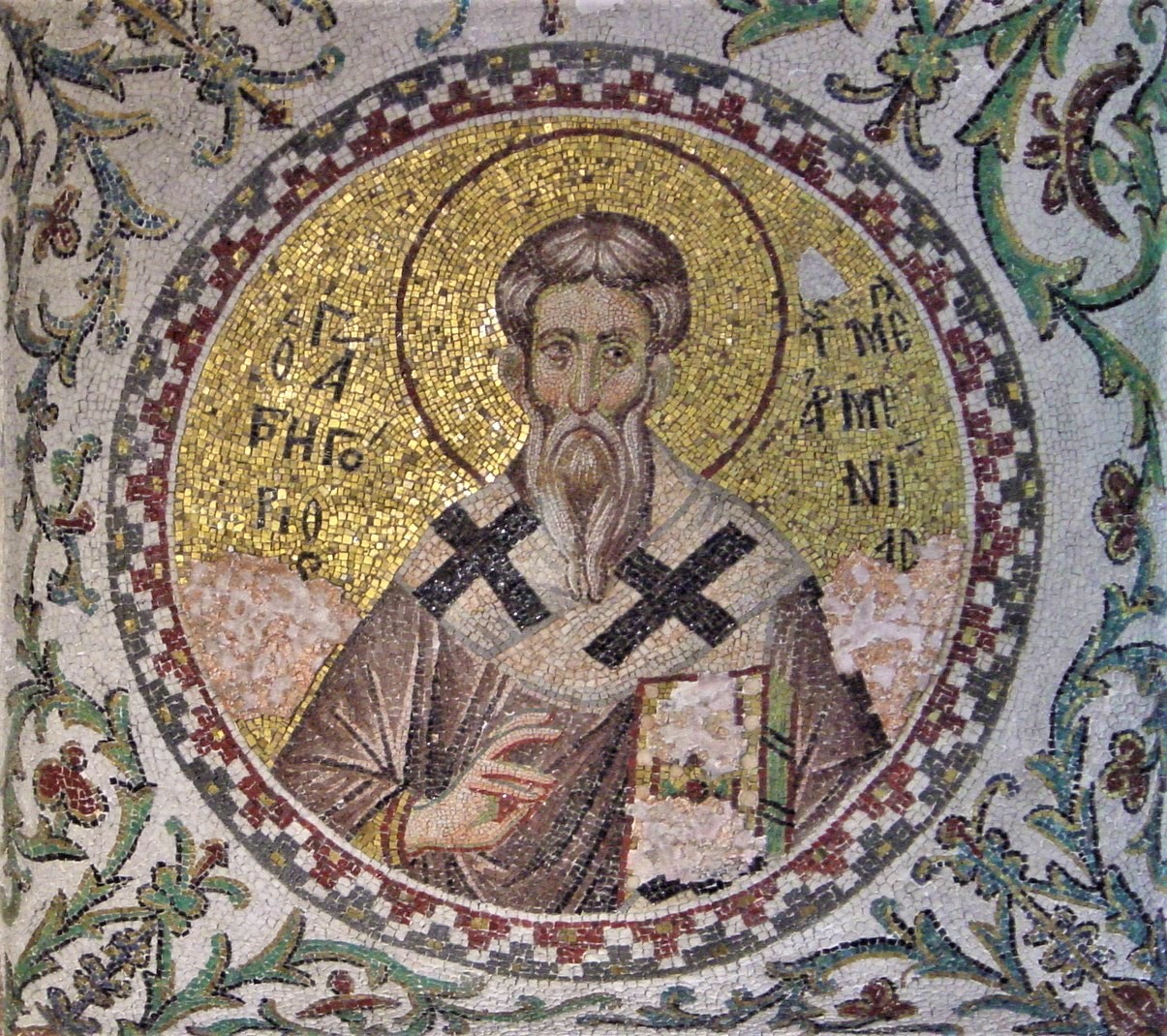

Armenia occupies a unique place in Christian history. According to Armenian tradition, King Tiridates III was converted through the ministry of Gregory the Illuminator at the beginning of the fourth century, making Armenia the first kingdom to embrace Christianity as its national faith.
Yet an important question is rarely asked: What form of Christianity first converted Armenia?
The Christianity of fourth-century Armenia should not automatically be identified with every doctrine and institution of the later Armenian Church. Gregory lived before the creation of the Armenian alphabet and generations before the great surviving works of Armenian Christian literature. At the same time, Marcionite Christianity was deeply established throughout the Christian East and remained sufficiently important in Armenia that one of the earliest Armenian theologians devoted a substantial polemic to it.
Most remarkably, that theologian preserves a saying which he expressly attributes to Marcion—and essentially the same saying appears in the Armenian tradition attributed to Gregory the Illuminator.
The possibility therefore deserves serious consideration that the Christianity of Gregory and earliest Christian Armenia stood considerably closer to the Marcionite tradition than later ecclesiastical history remembered.
A Saying Of Marcion In The Teaching Of Gregory
Eznik of Kolb was among the foundational theologians of Armenian Christianity. Writing in the fifth century, he composed his Refutation of the Sects, addressing various religious systems encountered by Armenian Christians.
Among them were the Marcionites.
Eznik’s testimony is particularly valuable because he does more than summarize Marcionite doctrines. At one point he preserves what he identifies specifically as a saying of Marcion:
“And in vain was that saying of Marcion, ‘We are the price of the blood of Jesus.’”
This is an extraordinary fragment.
The expression is sufficiently distinctive that we would naturally wish to know whether anything resembling it survives elsewhere.
It does.
In the teaching attributed to Gregory the Illuminator, Christ’s death is described as the act by which mankind was purchased from bondage:
“For He came and redeemed us with His Blood from our hard bondage, and set us free from the servitude of the wickedness of sin, by His divine nature. For we are the price of the Blood of Thy Son; being saved and made free by the Blood of His Body.”
The correspondence is striking.
Eznik says that Marcion taught that “we are the price of the blood of Jesus.”
The Armenian tradition has Gregory proclaim that “we are the price of the Blood of Thy Son.”
The importance of the parallel does not depend merely upon the words “blood” or “price.” Both passages employ the same unusual construction: the redeemed themselves are the price of Christ’s Blood.
And the surrounding passage attributed to Gregory makes the connection still more interesting.
Bought With A Price
The language attributed both to Marcion and Gregory is fundamentally Pauline.
The Apostolicon declares:
“Ye are bought with a price.”
— I Corinthians 6:20
And again:
“Ye are bought with a price; be not ye the servants of men.”
— I Corinthians 7:23
The second passage is particularly important because the teaching attributed to Gregory does not end with the statement that Christians are the price of Christ’s Blood. It immediately develops the consequences of that redemption:
“For we are not masters of our own selves, that we should walk according to our ideas of ease and comfort, or according to the opinions of any mortal man, even though he be our lord and master after the flesh.”
The resemblance therefore extends beyond an isolated expression.
Paul teaches that Christians have been bought with a price and consequently must “be not ye the servants of men.”
Gregory teaches that Christians are “the price of the Blood” of Christ and consequently are “not masters of our own selves” and must not live according to the commands of mortal masters.
This is the same Pauline complex of ideas: purchase, redemption, ownership, liberation, and freedom from human servitude.
That matters especially when considering a possible Marcionite background. The Apostolicon was the foundation of Marcionite Scripture. Paul’s proclamation of redemption through Christ was consequently not one voice among many within the Marcionite canon. It stood at the center of the Christian revelation.
Christ had come to redeem those held in bondage. Those who belonged to Him had been purchased at a price and were therefore no longer servants of the powers and authorities of this world.
Eznik’s attribution of the formula to Marcion therefore makes theological sense.
Its appearance in the teaching attributed to Gregory demands explanation.
Marcionites In Armenia
Marcionite Christianity was not an obscure Roman movement that disappeared shortly after Marcion’s lifetime.
Marcion himself came from Sinope in Pontus on the Black Sea, within the broader geographical world adjoining Armenia. From the second century onward, Marcionite churches spread extensively throughout Syria, Mesopotamia, Asia Minor, and other parts of the Christian East.
They also survived for centuries.
Epiphanius still described Marcionite communities throughout the East in the fourth century. Theodoret of Cyrrhus encountered substantial numbers of Marcionites in Syria during the fifth century. Other eastern witnesses demonstrate the persistence of Marcionite Christianity long after it had diminished in many western regions.
Armenia stood within this same eastern Christian environment.
Eznik’s extensive treatment of Marcionism is especially important in this respect. Whatever the precise geographical circumstances of every Marcionite community known to him, his polemic demonstrates that Marcionite Christianity remained sufficiently relevant to the Armenian Christian world of the fifth century to require sustained theological refutation.
The presence of Marcionism in this environment therefore cannot be treated as historically improbable. Marcionite Christianity belonged to the religious landscape in which Armenian Christianity developed.
The question is how far back that influence extended.
Gregory Before The Armenian Literary Tradition
Here chronology becomes essential.
Gregory the Illuminator belongs traditionally to the beginning of the fourth century. The great surviving Armenian literary tradition belongs principally to the fifth century, following the development of the Armenian alphabet associated with Mesrop Mashtots.
The principal literary account of Gregory, the History of Armenia attributed to Agathangelos, therefore cannot simply be treated as a transcript of Gregory’s preaching.
The work undoubtedly contains traditions concerning the conversion of Armenia, but the Gregory presented by the surviving literary tradition has passed through generations of transmission.
This creates a methodological problem.
By the time Armenian authors were committing the traditions of Gregory to writing, Christianity in Armenia possessed developed ecclesiastical institutions and was defining itself against competing Christian movements—including Marcionism.
The Gregory known through the later Armenian Church therefore cannot automatically be assumed to reproduce without alteration the precise theological identity of the historical Gregory.
Later Christians naturally remembered the apostle of their nation as the founder of their own form of Christianity.
Yet older language could survive within that tradition.
This makes the formula concerning the Blood of Christ particularly interesting. A fifth-century Armenian theologian explicitly identifies the saying “We are the price of the blood of Jesus” with Marcion, while the Armenian literary tradition of Gregory preserves essentially the same expression and develops it through precisely the Pauline language of purchase and freedom from servitude.
There are several possible explanations.
The similarity could result from independent reflection upon I Corinthians. The expression could have entered the Gregory tradition during its transmission. It could represent Marcionite language that circulated more broadly within early Armenian Christianity. Or it could preserve something older concerning the theological environment from which Gregory himself emerged.
The final possibility should not be dismissed merely because later Armenian Christianity remembered Gregory differently.
Gregory Reconsidered
The historical case does not rest upon claiming that a surviving fourth-century document explicitly calls Gregory a Marcionite. No such document is known.
The argument is cumulative.
Gregory’s mission belongs geographically and chronologically to an eastern Christian world in which Marcionite churches flourished. Marcionism remained sufficiently important in the Armenian religious environment that Eznik of Kolb devoted substantial attention to refuting it. The surviving literary portrait of Gregory comes from generations after Gregory himself, during the period in which Armenian Christianity was establishing its later ecclesiastical identity.
And within these two Armenian literary traditions survives an extraordinary correspondence.
Eznik preserves as a saying of Marcion the declaration:
“We are the price of the blood of Jesus.”
The teaching attributed to Gregory declares:
“For we are the price of the Blood of Thy Son.”
The surrounding Gregory passage then develops the same Pauline sequence found in the Apostolicon: Christians have been purchased by Christ and therefore do not belong to themselves or ultimately to mortal masters.
None of this, considered individually, establishes Gregory’s ecclesiastical affiliation beyond dispute.
Taken together, however, it permits a more provocative reconstruction of the beginnings of Armenian Christianity.
Gregory the Illuminator may have belonged to a form of Apostolic Christianity substantially closer to the Marcionite tradition than to the Christianity that later claimed him. The distinctly Marcionite saying preserved in his Armenian literary tradition may represent a surviving trace of that earlier identity.
If this reconstruction is correct, the subsequent history of Armenian Christianity appears in a different light. The Marcionites encountered and condemned by Armenian theologians in the fifth century would not necessarily have represented a foreign Christianity intruding upon an already settled religious landscape. They may instead have represented the continuation of an older current within Armenian Christianity itself.
Eznik’s polemic would then mark part of a struggle over which Christianity would define Armenia.
The later church prevailed and wrote the history. Gregory became its Illuminator, its apostle, and its saint.
Yet within the tradition attributed to him remained a formula that Eznik himself tells us belonged to Marcion:
“We are the price of the blood of Jesus.”
For our Church, that correspondence warrants the recovery of Gregory the Illuminator as a figure who may stand within, or remarkably near, the ancient Marcionite tradition. It invites us to reconsider the familiar story of Armenia’s conversion and to ask whether the light first carried into the Armenian kingdom was the same Apostolic Gospel preserved among the churches of Marcion.