


For centuries, Marcion’s Catholic opponents condemned him as a heretic, destroyed his books, and attempted to erase his Church from history. Yet Marcion survived in an unexpected place: the Latin biblical tradition itself.
Medieval Vulgate manuscripts preserve Pauline prologues of Marcionite origin. And in one manuscript preserved by the Vatican Apostolic Library, the Vatican’s own modern catalog associates the Pauline material with one extraordinary name: Marcion of Sinope.
Open the Vatican’s catalog for Arch.Cap.S.Pietro.A.1, a Pauline manuscript copied at Rome in the early twelfth century, and the attribution appears plainly:
ARCHIVAL ENTRY · BIBLIOTECA APOSTOLICA VATICANA
Shelfmark: Arch.Cap.S.Pietro.A.1
Dating: Sec. XII in. · 1101–1125 CE
Country: Italia · Roma
Title: S. Pauli apostoli epistolae
Other author: Hieronymus, s., 342/347–419 · fol. 386v
Other author: Marcion, di Sinope, sec. II · fols. 388r–411v
This is not a Marcionite website assigning Marcion’s name to an anonymous Catholic manuscript. It is modern catalog attribution maintained by the Biblioteca Apostolica Vaticana itself. It should not be confused with a medieval rubric in which the scribe personally wrote “Marcion” above the prologues. The significance is different and, in its own way, just as remarkable: the Vatican’s own modern catalog associates the Pauline material on fols. 388r–411v with Marcion of Sinope.
At folio 386v stands the preface of Saint Jerome to the Pauline corpus. Beginning at folio 388r, prefacing Romans, stands Pauline material the Vatican catalogs in association with Marcion.
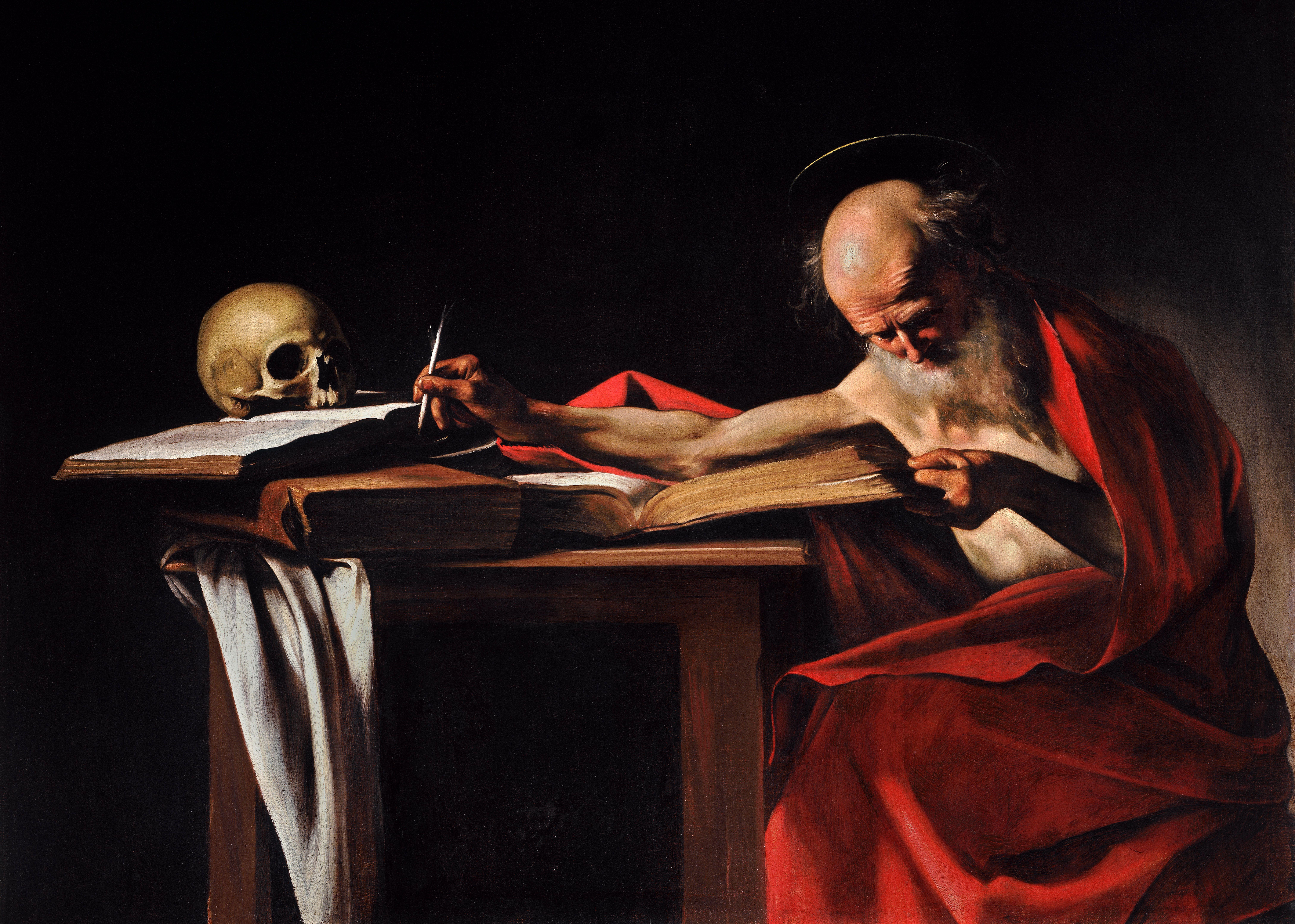
Jerome at folio 386v. Marcion beginning at folio 388r. Saint and heretic bound into the same Pauline manuscript.
Across the Pauline material, the catalog preserves one extraordinary attribution: Marcion of Sinope, second century.
In 1907, the Belgian Benedictine scholar Donatien de Bruyne demonstrated why.
De Bruyne examined the short Latin introductions, or prologues, that precede Paul’s letters in the Vulgate manuscript tradition and demonstrated that these were not originally Catholic compositions: their contents, assumptions, and textual history pointed back to Marcionite Christianity.
The evidence establishes three related facts.
First, the prologues are preserved throughout the Latin manuscript tradition of Paul.
Second, their Marcionite origin has been widely recognized since de Bruyne’s demonstration.
Third, scholars have debated whether the surviving prologues should be attributed directly to Marcion himself or somewhat more broadly to his followers.
The debate is therefore principally over the final degree of attribution, not over their Marcionite provenance.
Since de Bruyne identified their origin in 1907, the Marcionite provenance of these prologues has been a matter of scholarly record.
The prologues are not verses of Paul’s epistles themselves. They are ancient paratexts—editorial front matter transmitted with the letters, much like the introductions found before biblical books today. That distinction does not diminish the discovery. It identifies exactly what survived: the Marcionite editorial frame surrounding Paul.
Our Testamentum restores these prologues from their surviving Latin witnesses. Its reconstructed prologue to Galatians reads:
“The Galatians are Greeks. These first received the word of truth from the apostle; but after his departure they were tempted of false apostles, that they should turn unto the law and circumcision. These doth the apostle call back unto the faith of truth, writing unto them from Ephesus, by Titus.”
This is not merely a modern reconstruction floating free from the manuscript tradition. Adolf von Harnack prints the ancient Latin Galatians prologue beginning Galatæ sunt Græci and identifies Codex Fuldensis as the oldest surviving manuscript authority for the Marcionite prologue tradition. The core of the prologue preserved there is the same: the Galatians received the word of truth from Paul, false apostles sought to turn them toward the Law and circumcision, and Paul recalled them to the faith of truth.
The individual phrases are Pauline, but their selection as the editorial frame is significant. Before Galatians even begins, Paul represents the “word of truth” and “faith of truth,” while the rival apostles are defined by their attempt to turn Christians toward the Law and circumcision. The prologue tells the reader how the conflict is to be understood before the first verse is read.
It frames Galatians according to the fundamental conflict preserved throughout the Apostolicon: Paul’s Gospel confronted by a Judaizing countermission seeking to place Christians beneath the Law.
The prologues also preserve concrete historical information: recipients, locations of composition, couriers, imprisonment, and the circumstances occasioning individual letters. Our Church reconstructs them by collating their surviving Latin variants, preserving the fullest attested historical information rather than treating the wording of any single manuscript as canonical Scripture.
Adolf von Harnack immediately understood what de Bruyne had uncovered:
“We have indeed long known that Marcionite readings found their way into the ecclesiastical text of the Pauline epistles, but now we know that the Churches actually accepted the Marcionite prefaces … the Churches had not noticed the cloven hoof.”
— Adolf von Harnack, Marcion: Das Evangelium vom fremden Gott (1921)
Rome rejected Marcion. The Latin biblical tradition preserved his editorial inheritance.
And the twelfth-century Vatican manuscript is not the beginning of the story.
The Marcionite prologues appear centuries earlier in Codex Fuldensis, Codex Bonifatianus 1, copied in 546 CE and preserved in the Hessische Landesbibliothek. Harnack identifies Fuldensis as the oldest surviving manuscript authority for the Marcionite Pauline prologues, which also appear in numerous other Latin codices.
This is therefore not a case of the Vatican accidentally acquiring a stray Marcionite manuscript. The same prologue tradition had already traveled for centuries inside the Latin biblical tradition.
The Vatican codex is a witness to that transmission, not its cause.
The Latin Vulgate tradition did not appear from nothing. Long before Jerome, Latin-speaking Christians possessed translations of Scripture collectively known today as the Vetus Latina, or Old Latin tradition. When Damasus, the Catholic Bishop of Rome, commissioned Jerome in 382 CE to address the confused state of Latin biblical texts, Jerome entered a textual world that had already existed for generations.
It is therefore misleading to imagine Jerome sitting down with Greek manuscripts and independently producing from beginning to end the Latin New Testament that later generations would call the Vulgate. His precise relationship to individual New Testament books is considerably more complicated. The Vulgate tradition inherited, revised, standardized, and transmitted an older Latin textual inheritance.
And within that inheritance were the Marcionite Pauline prologues.
Hans Lietzmann went further, arguing that the earliest Latin translation of the Pauline corpus arose among Marcion’s followers in second-century Rome.
The historical circumstances explain why.
Marcion’s movement was intensely Pauline. Long before his formal separation from the Roman Church in 144 CE, Marcion possessed an organized corpus of Paul’s letters, circulated them among Christian congregations, and placed them beside the Evangelicon as Christian Scripture. Marcion and those associated with him possessed Pauline manuscripts at an exceptionally early date, before the competing ecclesiastical Pauline collection had reached its mature form.
They had the manuscripts, the motive, and the organized infrastructure.
As Christianity spread among people who spoke Latin rather than Greek, Paul had to be translated. On Lietzmann’s reconstruction, Marcion and his circle at Rome stood at the beginning of that Latin Pauline translation activity. They translated and transmitted Paul among Latin-speaking Christians, within the environment from which the Marcionite prologues emerged.
After Marcion’s excommunication in 144 CE, the independent Marcionite Church carried this Pauline inheritance across the Latin-speaking West and throughout the Roman world. Its churches preserved the Testamentum, copied the Apostle, and continued the textual tradition already associated with Marcion before the separation at Rome.
The later Vulgate tradition inherited and standardized an older Latin textual world.
The Latin Pauline tradition had already been shaped in part by Marcion and his circle, and the prologues traveled with it.
This fits what our Church preserves concerning Marcion’s place in the history of Christian Scripture.
In 128 CE, Marcion compiled the original Testamentum: the Evangelicon and Apostolicon, one Gospel and the ten original epistles of Paul constituting the whole Christian canon.
The Apostolicon contained ten Pauline epistles in their ancient order:
Galatians, I Corinthians, II Corinthians, Romans, I Thessalonians, II Thessalonians, Laodiceans, Colossians, Philemon, and Philippians.
The order matters. The Apostolicon was not simply the later Catholic collection of Paul with several books removed. It possessed its own arrangement and editorial identity as one of the two constituent books of the original Testamentum.
Readers will notice that the medieval Vatican manuscript calls one of these letters Ephesians, whereas the Marcionite Apostolicon knows it as Laodiceans. There is no contradiction. The Vatican manuscript naturally transmits the epistle under the title received by the later Catholic tradition. In the Testamentum it is Laodiceans.
Readers may also notice that Titus, I Timothy, and II Timothy are absent from Marcion’s original Apostolicon, while Marcionite-style prologues survive for the Pastoral Epistles.
Our Church does not regard this as evidence that the Pastorals originally belonged to Marcion’s Apostolicon. It demonstrates instead that the Marcionite Pauline tradition continued after Marcion.
The original Testamentum remains the Evangelicon and ten-letter Apostolicon. After Marcion’s martyrdom, later Marcionite Christians continued collecting and using additional writings attributed to Paul. Our tradition particularly associates this continued collection with Apelles, Marcion’s disciple.
Titus, I Timothy, and II Timothy, together with Alexandrians, were consequently received for ecclesiastical use without being inserted retroactively into Marcion’s original canon. Our Church preserves them separately in the Antilegicon: disputed Pauline writings subordinate to the canonical Evangelicon and Apostolicon.
The surviving prologue to Titus is particularly noteworthy:
“Titus he admonisheth and instructeth concerning the constitution of the presbytery, and spiritual conversation, and the avoiding of heretics that give heed unto Jewish fables; writing unto him from Nicopolis.”
Our Church preserves the possibility that this prologue derives from Apelles. Its warning against those who give heed to “Jewish fables” closely resembles theological language associated with Apelles, who rejected the Hebrew Scriptures as fables and failed prophecies.
The Pastoral prologues therefore point not toward an expanded original Apostolicon, but toward the continuation of Marcionite Pauline scholarship after Marcion. Philastrius, Ephrem, and John Chrysostom preserve evidence for later Marcionite knowledge or use of the Pastorals.
If the Titus prologue derives from Apelles, the surviving prologue tradition would preserve not merely the work of Marcion’s movement in general, but successive layers of Marcionite Pauline scholarship: Marcion providing the editorial frame of the Apostolicon, and his disciple continuing the same Pauline work after him.
The distinction is simple:
Marcion’s original ten epistles constitute the Apostolicon. Later disputed Pauline writings constitute the Antilegicon.
Their Marcionite-style prologues testify to the continuation of a Pauline editorial tradition, not to an alteration of the original canon.
In 139 CE, Marcion compiled the Antitheses, demonstrating the opposition between the God revealed by Jesus Christ and the deity depicted in the Hebrew Scriptures.
Then came the decisive institutional break.
On the Ides of July, 144 CE (15 July), Marcion was formally excommunicated at Rome. What had existed beforehand as Marcion and the Christian movement surrounding him now emerged openly as the independent Marcionite Church. From there the Church expanded across the Roman world and beyond, carrying with it the Testamentum and the Pauline textual tradition Marcion had already assembled.
This chronological distinction matters.
The Testamentum did not originate as a reaction to Marcion’s excommunication. His Pauline corpus, Gospel, and theological work preceded the separation. The institutional break of 144 CE did not create his Scriptures; it separated the Church that preserved them from the Roman communion that rejected him.
By the time Jerome entered the story more than two centuries later, the Latin Pauline tradition already had a long history.
The remarkable consequence is that Marcionite material became embedded deeply enough within that tradition to survive the suppression of the ancient Church from which it came.
There is no need to suppose that Jerome knowingly inserted Marcionite writings into the Latin Bible. The opposite is more revealing. The material was already there. Its original identity had become sufficiently obscured that Christians who would never knowingly preserve a book bearing Marcion’s name continued copying the Marcionite Pauline prologues.
Harnack’s “cloven hoof” survived because later Christians no longer recognized the footprint.
The scholarly dispute concerns how close to Marcion himself we should place that footprint.
One position, associated with scholars including Harnack, Karl Theodor Schäfer, and Markus Vinzent, attributes the writings directly to Marcion. Another, represented by scholars such as Hermann Josef Frede and Nils Alstrup Dahl, locates their composition more cautiously among his followers.
At minimum, the Latin Church spent centuries copying Pauline introductions inherited from the Marcionite tradition.
At maximum, it spent centuries copying the words of Marcion himself.
Even Oxford Reference summarizes the prevailing judgment straightforwardly: “Most of them probably originated in Marcionite circles.”
The position that the prologues have no Marcionite origin has found little significant support against the cumulative textual and historical evidence.
Markus Vinzent has pressed the evidence further and argued that the prologues constitute rediscovered writings of Marcion himself. His argument is especially significant because Vinzent is also one of the principal modern scholars arguing for the priority of Marcion’s Evangelicon in the development of the canonical Gospel tradition.
The two strands converge.
The Evangelicon and the Pauline editorial frame lead back toward the same figure: Marcion of Sinope.
And in the case of the Pauline prologues, the Vatican catalog still preserves his name.
Modern scholarship does not establish the authority of our Testamentum. The authority of the Testamentum does not depend upon de Bruyne, Harnack, Lietzmann, Vinzent, or any other modern scholar. Their work is valuable because surviving manuscripts and historical research independently preserve traces of the same ancient textual tradition our Church recognizes.
Nor are we dealing with an isolated curiosity found in a single Vatican codex. Friedrich Stegmüller’s Repertorium Biblicum Medii Aevi documents the argumenta across the medieval biblical tradition. The prologues belong to a broad Latin manuscript transmission whose surviving major witnesses reach back to the sixth century.
The chronology tells the story in a continuous line.
Marcion compiled the Testamentum in 128 CE and the Antitheses in 139. The Roman separation followed on the Ides of July 144, and Marcion suffered martyrdom in 154. Codex Fuldensis preserved the Marcionite prologues in 546, while historical notices of the ancient Marcionite Church continued into the late tenth century, with the last recorded in our Chronicon in 987.
The institutional historical record eventually fades. The textual transmission does not.
Arch.Cap.S.Pietro.A.1 preserved the Pauline material cataloged in association with Marcion in the early twelfth century. The Council of Trent declared the ancient Latin Vulgate authentic for ecclesiastical use in 1546. And in 1907, de Bruyne recovered the forgotten Marcionite provenance of the prologues.
Almost none of Marcion’s original library survives today as an independent manuscript. His Evangelicon, Apostolicon, and Antitheses were condemned and disappeared as freestanding books. His teaching and textual inheritance nevertheless escaped destruction through two remarkably different routes.
The first was polemical preservation.
Tertullian devoted five books of Adversus Marcionem to attacking Marcion. He quoted Marcion’s Gospel, Pauline text, Antitheses, and theological arguments in order to refute them. His prosecution consequently became one of the principal means by which the evidence he sought to destroy survived.
The prosecution preserved the words of the defendant.
The second was textual preservation.
The Latin transmission of Paul preserved material inherited from Marcionite Christianity. Because the origin of the Pauline prologues was eventually forgotten, they survived where books openly carrying Marcion’s name could not. They passed from one generation of scribes to another, through the Vulgate manuscript tradition, and ultimately into libraries maintained by the Church that had condemned their source.
One route preserved Marcion because his enemies attacked him.
The other preserved Marcion because his enemies ceased to recognize him.
Marcion was condemned.
His Church was persecuted.
His books disappeared.
His name became synonymous with heresy.
Yet his Pauline inheritance continued to travel through the Latin West.
Centuries later, the trail leads into the Vatican itself.
The manuscript preserves the material. The Vatican’s catalog preserves the name.
Jerome at folio 386v. Marcion beginning at folio 388r. Saint and heretic bound into the same Pauline manuscript.
They condemned Marcion. They destroyed his books. They declared his Church heretical.
Yet they preserved what they could not completely erase.
The evidence survived with Paul.
And the Vatican’s own catalog still bears Marcion’s name.