

The theology preserved in Marcion’s epistles is not a theology of legal bookkeeping, nor a doctrine in which God the Father must be reconciled to mankind by the punishment of His Son. It is the theology of life entering the dominion of death, truth entering the realm of falsehood, and Jesus Christ healing the human creature by His manifestation, passion, and resurrection.
Marcion writes as one approaching death. His bonds are not literary decoration; they are the proving-ground of his doctrine. He teaches while being led toward martyrdom, and therefore death is never treated as an abstraction. Death is the power beneath which men are enslaved. It is the weapon by which the world keeps souls in fear, the atmosphere in which sin reigns, and the terror by which the prince of this world holds men captive.
The Apostle says, “The sting of death is sin; and the strength of sin is the law” (I Corinthians 15:56). This is a Marcionite key. Sin reigns in death. Law strengthens sin. Accusation binds the conscience. Fear bends man inward upon himself. Man is not saved by being handed a heavier law, but by being delivered from the tyranny that law exposes and death enforces.
Alexandrians gives the same witness: Christ took part in flesh and blood “that through death he might destroy him that had the power of death, that is, the devil” (Alexandrians 3:10). The Lord does not merely pronounce a legal acquittal from afar. He enters the place where the enemy claims dominion, and by death He destroys the one who held death as power.
Marcion’s theology therefore begins from the goodness of the Father. The Father is not wrathful against His Son. The Son is not punished so that the Father may become merciful. The Father sends the Son because He is merciful already. The Father’s will is revealed in Jesus Christ, not in wrath, necessity, accusation, or death.
This is where Marcion stands opposed to the later Western systems of Augustine and Calvin. Augustine begins the narrowing of salvation around inherited guilt, the condemned mass, and bondage of the will. Calvin hardens that narrowing into sovereign decree, penal substitution, limited atonement, forensic imputation, and double predestination. In such systems, the central problem becomes guilt before divine law, and the central solution becomes satisfaction of divine justice.
Marcion’s epistles move in another grammar entirely. The central problem is not that the Good Father must be appeased. The central problem is death, corruption, bondage, falsehood, and the lower world-order. The central solution is not punishment transferred from the elect to Christ. The central solution is Christ Himself: the Life from above entering death, breaking its dominion, and making the faithful partakers of His victory.
In their soteriological systems, Augustine and Calvin place man before law, guilt, sovereignty, decree, and condemnation. Marcion places man before Christ, the revelation of the Good Father, the destroyer of death, and the giver of life. Augustine and Calvin make salvation chiefly juridical. Marcion’s epistles make salvation medical, liberative, participatory, and sacramental. Augustine and Calvin ask how the guilty may be legally counted righteous before divine judgment. Marcion asks how the dying may be delivered from death, healed from corruption, and brought into life through Jesus Christ.
Fear of death is one of the great instruments by which the world enslaves the soul. Under death, man seeks security at any cost. He clings to possession, reputation, power, pleasure, and the preservation of the mortal self. He becomes useful to the powers precisely because he is afraid. In this fear he becomes suspicious, defensive, acquisitive, and cruel. Death does not merely end bodily life; it corrupts the moral imagination before the body reaches the grave.
Christ comes, therefore, not as a mere teacher of ethics, nor as another prophet within the order of the world, but as the Stranger from the Good Father. He descends in mercy. He enters our condition. He takes up the reality of suffering. He confronts the prince of this world not by imitation of worldly power, but by meekness, obedience, faith, love, and the Cross.
Marcion says that union with Jesus Christ and with the Father is the union of faith and love, preferred before all things (Marcion to the Magnesians 1:4). He adds that if the faithful endure the despite of the prince of this world and escape therefrom, they shall attain unto God (Marcion to the Magnesians 1:5). This is not Augustinian determinism or Calvinist decree. It is deliverance through faith, love, endurance, and union with Christ.
The prince of this world is not overthrown by the weapons of the world. Marcion craves gentleness, “whereby the prince of this world is brought to nought” (Marcion to the Trallians 5:7). The soul that refuses fear refuses his dominion. The soul that refuses hatred refuses his image. The soul that bears Christ’s meekness is already passing from death into life.
The Word was made flesh (Evangelicon 1:14). Being life, He entered the realm of mortality. Being from above, He came beneath the powers of this age. Being impassible in divine glory, He truly suffered in the economy of His mercy. He did not despise embodiment, nor did He teach that flesh is evil in itself. Rather, He entered the mortal condition in order to heal, cleanse, and liberate those held beneath corruption.
The body is not the enemy. Matter is not evil. The enemy is death, corruption, falsehood, and the powers that rule through them. The lower order boasts in necessity, accusation, domination, and decay; the Father reveals freedom, grace, love, and life. Christ does not save us by denying the reality of suffering. He saves us by passing through it and emptying it of final power.
This is why Marcion rejects docetism with such force. If the passion were only an appearance, salvation itself would be only an appearance. If Christ did not truly enter suffering, He did not truly conquer it. If He did not truly enter death, He did not truly break its dominion. If His flesh and blood were unreal, then the medicine is unreal, the Cross is unreal, and the hope of the faithful is unreal.
The docetic error is not too spiritual; it is not spiritual enough, for it refuses the truth by which the Father heals what is real. It denies the wound, and therefore denies the cure. It denies death, and therefore remains captive to death. It denies the flesh of Christ, and therefore loses the medicine of immortality.
Marcion writes: “Be ye deaf therefore, when any man speaketh to you apart from Jesus Christ,” who “was truly persecuted under Pontius Pilate, was truly crucified and died,” and was “truly raised from the dead” (Marcion to the Trallians 9:1–2). He then presses the argument: if Christ suffered only in semblance, why is Marcion in bonds, why does he desire to fight with wild beasts, and why does he die in vain? (Marcion to the Trallians 9:3–6).
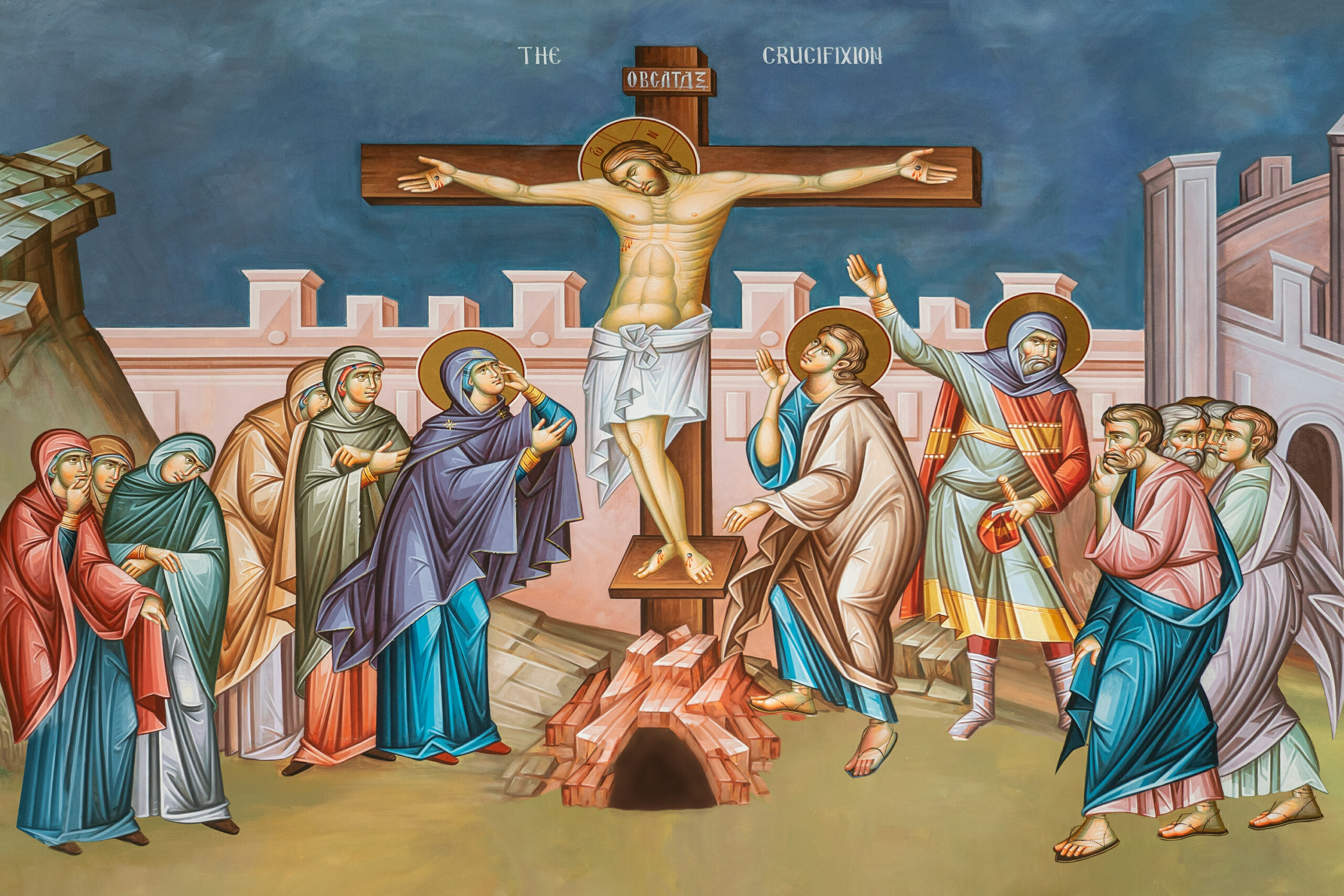
This is not a secondary point. It is the center of the theology. A merely seeming Christ can only bring a merely seeming salvation. But Jesus is Lord. The Son of the Good Father truly appeared, truly suffered, truly died, and truly rose. His passion is not shame but victory. His Cross is not defeat but deliverance.
Resurrection is not an appendix to atonement. It is not merely God the Father’s receipt proving that a penalty has been paid. It is the victory itself: death broken, corruption breached, and life made manifest in Jesus Christ. His resurrection is not merely proof that a legal debt has been satisfied; it is the life of God breaking into death and undoing death’s dominion.
Marcion’s epistles declare Christ to be the medicine of immortality. In the breaking of one bread, the Church receives “the medicine of immortality and the antidote that we should not die but live for ever in Jesus Christ” (Marcion to the Ephesians 21:3). This is not a juridical metaphor. It is medical, participatory, sacramental, and ontological. The disease is death. The medicine is Christ. The healing is participation in His life.
Holy Communion is therefore not an ornament of the Church’s life. It is the sacramental proclamation of Christ as the medicine of immortality. The faithful do not gather around an abstraction. They gather around the Lord who truly suffered, truly gave Himself, and truly lives. In the Holy Lovefeast, the Church confesses that life is received from Christ, that the faithful are nourished by Him, and that no soul is healed by the poison of falsehood.
The flesh and blood of Christ are not signs of death’s victory, but of death’s overthrow. The world sees flesh and blood and thinks only of weakness, mortality, and defeat. Faith beholds the Lord’s flesh and blood and sees the cure of corruption, the nourishment of love, and the communion of life. The faithful live not by law, fear, or accusation, but by Christ Himself.
Marcion’s contrast between true nourishment and false nourishment is severe. He commands the faithful to take only Christian food and abstain from strange herbage, which is heresy (Marcion to the Trallians 7:1). Heretics mingle poison with Jesus Christ, as men who administer a deadly drug with honeyed wine, so that the unwary drink death with delight (Marcion to the Trallians 7:2). The world does not always offer death as death. It offers death sweetened, decorated, theologized, and made respectable.
This applies with special force to legal religion. A doctrine may speak the name of Christ and yet mingle Him with poison. When Christ is made the object of the Father’s wrath, poison has been mixed with His name. When the Father is made the author of damnation by eternal decree, poison has been mixed with His goodness. When salvation is reduced to imputed status without healing, transformation, love, and freedom, poison has been mixed with grace.
Augustine’s system begins to re-enthrone the very logic from which Christ liberates us: inherited guilt, juridical condemnation, and bondage of the will. Calvin’s system presses that logic to its most terrible conclusion: God’s sovereign decree becomes the ultimate explanation for both salvation and damnation; Christ’s death becomes a limited satisfaction for the elect; and the human person stands primarily before divine sovereignty rather than before the healing mercy of the Good Father.
Against this, Marcion proclaims no such terror. The Father is not the hidden will behind damnation. The Father is revealed in Jesus Christ. Christ does not conceal the Father’s mercy behind a decree of wrath. Christ manifests the Father’s mercy by descending, suffering, dying, rising, and giving life.
Marcion’s two ways are not the Augustinian division between an elect mass rescued from a damned mass by inscrutable decree. They are life and death, truth and falsehood, the Father’s character and the world’s character. “These two—life and death—are set before us together,” and each man goes to his own place (Marcion to the Magnesians 4:1). There are “two coinages,” one of God and one of the world, each bearing its own stamp (Marcion to the Magnesians 4:2).
This image of two coinages is decisive. The world stamps its own with fear, accusation, compulsion, domination, and corruption. The Father stamps His own with faith, love, meekness, endurance, and freedom. Doctrine must therefore be judged by the image it bears. Doctrine that produces servile fear, fatalism, hatred, despair, or bondage bears the coinage of the world. Doctrine that produces faith working through love bears the character of the Father.
The Apostle teaches that “flesh and blood cannot inherit the kingdom of God; neither doth corruption inherit incorruption” (I Corinthians 15:50). This does not mean that the body is evil. It means corruption must be clothed with incorruption, and mortality must be clothed with immortality. The mortal is not healed by its own power. It is healed by the Life that descends from above.
Marcion to the Smyrnaeans makes the same confession concrete. Christ was in the flesh even after the resurrection; He invited His disciples to handle Him; they touched Him and believed, being joined unto His flesh and blood; and therefore they despised death and were found superior to death (Marcion to the Smyrnaeans 3:1–5). The point is not crude materialism. The point is victory. Christ’s real passion and resurrection make the faithful superior to death.
The denial of Christ’s flesh is therefore not a harmless error. Marcion calls such men “advocates of death rather than of the truth” (Marcion to the Smyrnaeans 5:1). He says that the one who does not confess Christ as bearer of flesh denies Him altogether and is himself “a bearer of a corpse” (Marcion to the Smyrnaeans 5:4–5). To abandon the true passion is to abandon the resurrection, for Marcion says the passion is our resurrection (Marcion to the Smyrnaeans 5:7).
The same logic governs Christian life. Marcion tells the faithful to recover themselves “in faith which is the flesh of the Lord, and in love which is the blood of Jesus Christ” (Marcion to the Trallians 8:2). Faith and love are not ornaments added to doctrine. They are the living form of participation in Christ. A system that preaches forensic rescue while neglecting faith, love, mercy, and healing has departed from the texture of Marcion’s theology.
This is why Marcion’s epistles can say that those with strange doctrine have no care for love, for the widow, for the orphan, for the afflicted, for the prisoner, or for the hungry and thirsty (Marcion to the Smyrnaeans 6:5–7). False doctrine is known by its fruit. A legal system can be exact and still be dead. A doctrinal structure can be orderly and still be loveless. But the theology of the Father revealed in Christ produces faith, love, mercy, endurance, and care.
The false teachers are therefore not merely mistaken in opinion. They administer poison. They offer sweetened words that seem pious, but their doctrine nourishes death. They mix the name of Christ with the elements of the world, with accusation, unreality, fear, and compulsion. They give deadly drink in the cup of religious speech. They offer herbage from another field, and those who eat it become sick unto death.
Against such poison, the faithful must receive Christian nourishment only: the truth of Christ, the faith of Christ, the love of Christ, the flesh and blood of Christ, the passion and resurrection of Christ. Falsehood kills because it binds the soul to unreality. Truth heals because it joins the soul to Him who is Life.
Marcion’s imagery of branches also matters. The deadly offshoots of false doctrine bear deadly fruit; if a man tastes it, he dies. Such men are not the Father’s planting. If they were, they would be branches of the Cross, and their fruit would be imperishable (Marcion to the Trallians 10:1–3). The faithful are not merely acquitted defendants. They are living branches of the Cross, bearing incorruptible fruit from union with Christ.
The Cross is not isolated from the Church. Marcion says that through His passion Christ invites us, “being His members,” and that the head cannot be found without members, “seeing that God promiseth union” (Marcion to the Trallians 10:3–4). Salvation is therefore not an external legal fiction. It is union with the crucified and risen Lord.
Here again the contrast with Augustine and Calvin is sharp. Their systems tend to organize salvation around divine command, inherited guilt, sovereign election, legal status, and penal satisfaction. Marcion’s epistles organize salvation around union, healing, nourishment, deliverance, faith, love, and life. The faithful are not merely declared righteous while remaining under the imaginative dominion of death. They are joined to the passion and resurrection of the Lord.
The Apostle says, “I am crucified with Christ: nevertheless I live; yet not I, but Christ liveth in me” (Galatians 2:20). This is the participatory heart of Marcionite theology. Salvation is not external only. The faithful are joined to Christ. His death becomes the death of the old bondage. His life becomes the life of the believer. His freedom becomes our freedom. His victory becomes our hope.
Nor is this a rejection of moral transformation. It is the only true ground of it. The law commands from without, but grace renews from within. The law exposes sin, but Christ heals the sinner. The law threatens death, but Christ gives life. The faithful do not perform good works in order to purchase salvation. They bear good fruit because the life of Christ has taken root in them.
Ransom, therefore, must be understood as liberation and cleansing, not as a payment that changes the Father from wrathful to merciful. The Father sends the Son because He is merciful. Christ gives Himself for us to cleanse us from old ungodliness, to loose the bonds of corruption, and to bestow life. The ransom is victory over captivity, not appeasement of the Good Father.
What is absent from Marcion’s theology is as important as what is present. There is no need to make wrath the governing category of salvation. There is no need to make eternal torment the center of Christian proclamation. There is no need to make inherited guilt, limited atonement, double predestination, irresistible decree, or bondage of the will the foundation of the faith. These systems shift attention away from the concrete tyranny of death and the concrete victory of Christ.
The Church does not answer Calvin’s limited atonement by collapsing judgment into universalism. The Father gives life through Christ, and the faithful proclaim the mercy of the Good Father to all who will receive it. Yet judgment remains. The Eternal Sin ends not in endless torture, but in destruction. Death is not enthroned forever; neither is rebellion granted immortality.
The later Western habit of treating salvation chiefly through law, penalty, sovereignty, and satisfaction obscures the older and clearer grammar of life against death. When salvation is preached chiefly as penalty and payment, the Father is obscured. When the Cross is made a transaction of wrath rather than the triumph of love, the Son is obscured. When resurrection becomes a mere proof rather than the renewal of life, the hope of the Church is obscured.
The Marcionite proclamation is simple, ancient, and luminous: the Good Father sent His Son. The Son descended in mercy. Jesus Christ revealed the Father unknown to the world. He suffered under the powers of this age. He died, and by dying broke the dominion of death. He rose, and by rising opened the way of life. He calls all who hear Him to faith, love, holiness, and freedom.
This is why Marcion’s epistles belong to the Church. They are not canon above the Evangelicon and Apostolicon, but they are a faithful ecclesiastical witness to the shape of Marcionite theology. They are received because they accord with the Evangelicon and Apostolicon, not because they stand above them. They teach how the Church speaks against unreality, legalism, fear, poison, and death. They remind us that the Church is not a school of speculation, but a hospital of souls.
The faithful therefore must cling to Christ’s true passion. We must not be ashamed of the Cross. We must not flee from the Lord’s flesh and blood as though salvation were a ghostly idea. We must not exchange the living faith for the poison of legal religion. We must receive the medicine of immortality: Jesus Christ Himself, crucified and risen, the Lord of life.
For there are two ways: death and life. The world offers death beneath the name of necessity, law, honor, sovereignty, power, and fear. The Father gives life in His Son. The world accuses; Christ releases. The world wounds; Christ heals. The world binds; Christ frees. The world kills; Christ raises.
This is the theology preserved in Marcion’s epistles: not a new law, but a new life; not the glorification of death, but its overthrow; not the appeasement of an angry deity, but the revelation of God the Father through Jesus Christ our Lord.
Amen.