


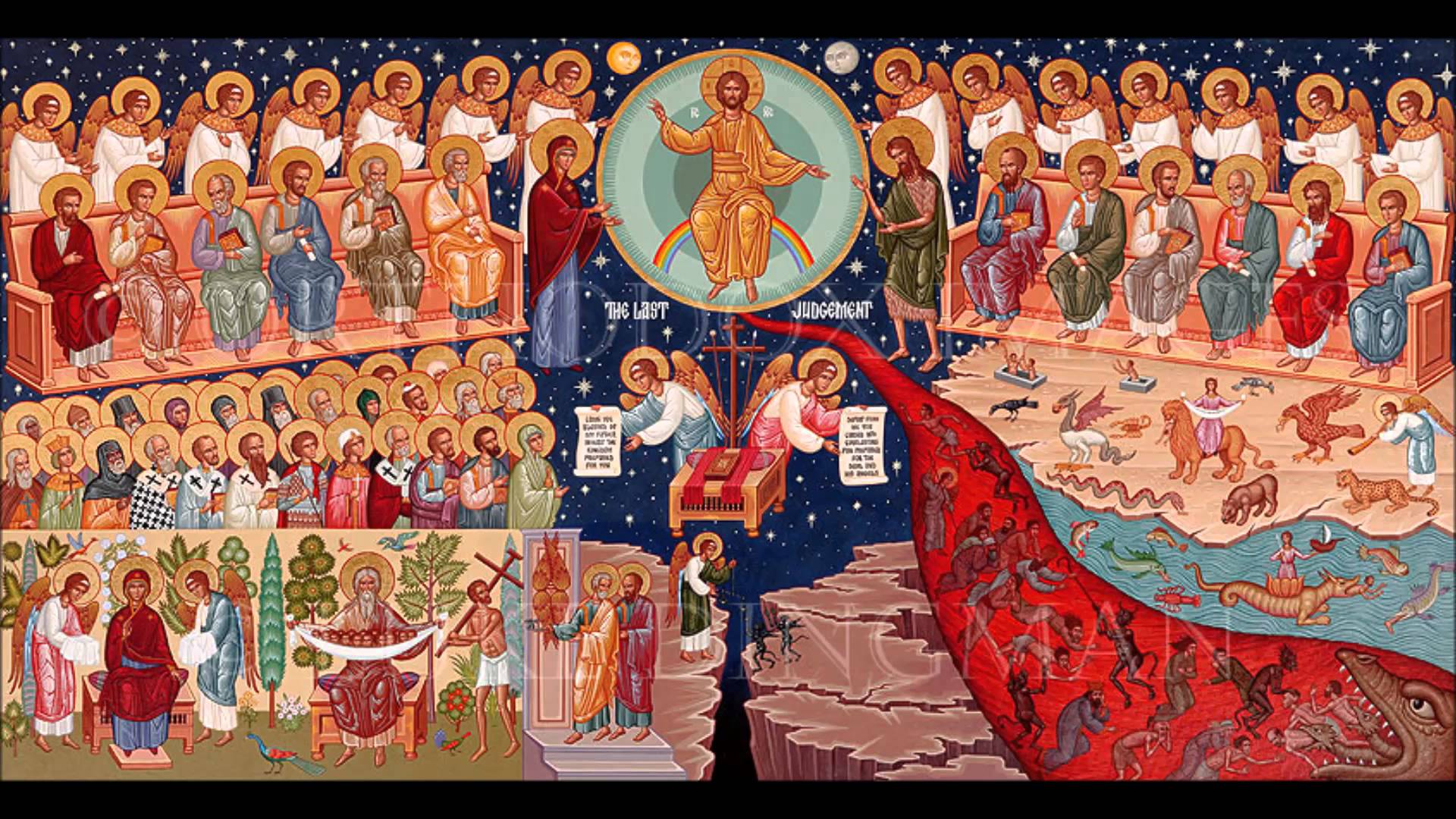

The Marcionite Church affirms the judgment of souls, the destruction of the Eternal Sinner, and the final victory of God the Father over sin, death, and the powers that govern this world. At the same time, we reject the doctrine that God preserves the wicked forever in conscious torment.
The Gospel revealed by Jesus Christ proclaims a Father of goodness, grace, mercy, and reconciliation. Eternal torture cannot be reconciled with His character. It would preserve sin and suffering without end, grant evil an everlasting existence, and transform divine judgment into perpetual cruelty.
The rejection of eternal torment does not mean that judgment is unreal or that every soul automatically enters the kingdom of God. Souls are judged according to their response to grace, truth, the Gospel, and the operation of the Holy Spirit. There is suffering, correction, bondage, death, corruption, and, in the case of the Eternal Sin, final destruction.
The Marcionite teaching cannot be reduced to the ordinary doctrine of conditional immortality. The soul survives bodily death and remains under the judgment and providence of God. Souls not yet reconciled to the Gospel are not ordinarily destroyed at death or at the first act of judgment. They remain within the physical, fleshly, and visible world, passing through correction and transmigration until they receive the Gospel and are saved.
The incorruptible life of the kingdom is nevertheless a gift. Continued existence within the world-order is not the same as immortality in God the Father. The unreconciled soul remains subject to embodiment, suffering, decay, judgment, and death until it is awakened by Christ and delivered from the lower world.
The Apostle writes:
“For the wages of sin is death; but the gift of God is life through Jesus Christ our Lord” (Romans 5:23).
Death is the fruit of the fleshly world and of separation from the life revealed in Christ. Life in the kingdom is not an inherent possession that every soul enjoys regardless of its condition. It is the gift of God received through Jesus Christ.
The Church therefore distinguishes three conditions of the soul. Spiritual souls who have received the Gospel and have not hardened themselves against the Holy Spirit ascend into the kingdom of God. Natural souls who remain unreconciled continue under judgment and transmigrate within the present world until they are saved. Souls that commit the Eternal Sin are finally destroyed.
In short: spiritual souls ascend, natural souls transmigrate, and Eternal Sinners are annihilated.
This teaching preserves both the mercy and justice of God the Father. No soul is finally lost merely because it was born in a place or age where the Gospel was unknown, because it suffered under ignorance, or because it died before receiving a true proclamation of Jesus Christ. Through transmigration, such a soul may encounter the Gospel in due season.
The inequalities of earthly life are therefore not the final measure of divine judgment. One person may hear the Gospel clearly and repeatedly, while another may know only distorted religion, coercion, superstition, or unbelief. God the Father does not condemn souls eternally according to accidents of birth, geography, language, education, or historical circumstance.
Transmigration, also called metempsychosis, is the passage of the soul from one bodily life into another within the present world-order. It is not the resurrection of the same flesh, nor is it ascent into the kingdom of God. It belongs to the remedial judgment of souls that remain bound to the physical world but have not committed the Eternal Sin.
Epiphanius records that Marcion assigned salvation to souls rather than to fleshly bodies and taught “reincarnations of souls, and transmigrations from body to body.” This ancient testimony accords with the Marcionite distinction between natural souls that remain bound to the world and spiritual souls awakened by the Gospel.
The Evangelicon preserves an image of judgment that the ancient believers associated with this remedial passage:
“For as thou goest with thine adversary before the magistrate, on the way give diligence to be delivered from him; lest he hale thee to the judge, and the judge deliver thee to the officer, and the officer cast thee into prison. I say unto thee, thou shalt by no means depart thence, till thou hast paid the very last lepton” (Evangelicon 11:70–71).
The prison is not everlasting. The soul remains until the debt has been exhausted. Judgment has a real duration and consequence, but it is ordered toward release for those who remain capable of repentance, correction, and reception of the Gospel.
This does not mean that suffering purchases salvation or that a soul earns grace through punishment. Salvation remains the free gift of God the Father through Jesus Christ. Remedial judgment breaks attachment to falsehood, exposes the consequences of sin, and prepares the soul to receive what it could not or would not receive before.
Transmigration is therefore neither automatic ascent nor an excuse for sin. A soul may continue through repeated embodiment, bondage, and correction until it turns toward the light of Christ. The process is grievous precisely because the fleshly world remains subject to weakness, ignorance, conflict, decay, and death.
The Apostle teaches that this bondage is not everlasting:
“Because the creature itself also shall be delivered from the bondage of corruption into the glorious liberty of the children of God” (Romans 7:21).
The purpose of salvation is deliverance from corruption. God the Father does not endlessly preserve the fallen condition of creation. Through Christ, souls are liberated from the dominion of the lower powers and translated into the kingdom of God.
The faithful who have received Jesus Christ, been renewed by the Holy Spirit, and persevered in faith are not destined for repeated bodily lives. Having become spiritual, they are received into rest and drawn toward the kingdom of God.
The Apostle writes:
“For our conversation is in heaven; from whence also we look for the Saviour, the Lord Jesus Christ” (Philippians 3:20).
The Christian hope is not the eternal restoration of the present fleshly order. Flesh and blood cannot inherit the kingdom of God. The salvation promised by Christ concerns the liberation and glorification of the soul rather than the everlasting preservation of corruptible flesh.
The Marcionite Church rejects an earthly millennium, a restored national kingdom, and the permanent continuation of the present world-system. Christ reigns from heaven, and the faithful await their gathering unto Him.
Judgment must therefore be understood in relation to the soul’s condition. For the faithful, judgment confirms liberation and ascent. For the unreconciled, judgment brings correction, continued bondage, and transmigration. For those who commit the Eternal Sin, judgment ends in annihilation.
The Eternal Sin is the settled and willful blasphemy against the Holy Spirit. Jesus Christ declares:
“And every one, who shall speak against the Son of man, it shall be forgiven him: but unto him that speak against the Holy Spirit it shall not be forgiven” (Evangelicon 11:9).
Christ distinguishes words spoken against the Son of man, which may be forgiven, from the final blasphemy against the Holy Spirit. The Eternal Sin is not an ordinary transgression, a season of doubt, a moment of anger, an ignorant statement, a passing denial, or a sin committed through weakness.
It is a hardened and settled repudiation of the Holy Spirit’s witness to Jesus Christ. It is the conscious rejection of the very operation through which repentance, faith, forgiveness, and spiritual renewal are received.
The Eternal Sin is therefore a sin unto death. Where the Spirit is knowingly and finally blasphemed, the means by which the soul could be awakened and reconciled has been rejected at its root. Such a soul does not remain within an endless cycle of transmigration, nor is it preserved forever in torment. It is annihilated.
Annihilation means the final destruction of the soul’s conscious and personal existence. It is not separation from God while remaining alive forever, and it is not imprisonment in everlasting fire. The Eternal Sinner ceases to exist.
This is the only class of human souls to which the Marcionite Church applies final annihilation. Ordinary sinners, unbelievers, the ignorant, the confused, the unreconciled, and those still bound to the world are not thereby classified as Eternal Sinners. They remain under judgment and correction until they receive the Gospel and are saved.
The destructive language of the Apostolicon must be read within this complete framework. Paul writes of those “whose end is destruction” (Philippians 3:19) and of “everlasting destruction from the presence of the Lord” (II Thessalonians 1:9). These passages affirm the seriousness of judgment, but they do not teach the indiscriminate annihilation of every sinner.
Destruction may describe the ruin of the fleshly life, the collapse of the worldly order, the defeat of hostile powers, exclusion from the immediate rest of the faithful, or, in its absolute and final sense, the annihilation of those who have committed the Eternal Sin. No isolated use of the word “destruction” should be made to overthrow the wider teaching concerning correction and transmigration.
The finality of annihilation applies where Christ declares that forgiveness cannot be received. It must not be extended beyond the boundary established by the Lord Himself. To annihilate every unreconciled soul would deny the remedial purpose of judgment and the Father’s continuing work of salvation.
The Church accordingly rejects the claim that all persons who die without explicit Christian faith are immediately and permanently destroyed. Such a teaching would bind salvation to the circumstances of a single earthly life and would condemn countless souls who never encountered the Gospel in truth.
It would also contradict the Marcionite teaching that souls transmigrate from body to body. If every unreconciled soul were annihilated at judgment, there would be no souls remaining to undergo correction, repeated embodiment, or later reception of the Gospel.
Neither does the Church teach universalism without exception. The Eternal Sin establishes a real boundary. The grace of God reaches every soul capable of receiving it, but grace is not received by the soul that knowingly and permanently blasphemes the Holy Spirit.
The Marcionite hope is therefore broader than general annihilationism but more exact than absolute universalism. All souls that remain capable of repentance and spiritual awakening are preserved through judgment until they are saved. Only those who have closed themselves finally against the Holy Spirit are destroyed.
The parable of the Rich Man and Lazarus does not overturn this teaching. It is not a literal map of the kingdom of God the Father or proof of eternal hell. Christ employs the imagery of Abraham, Moses, the prophets, torment, and the great divide to expose the inability of the false covenant to save.
Abraham cannot deliver the rich man. Moses and the prophets cannot awaken his brethren. The imagery remains within the religious world of the lower covenant and demonstrates its failure. True salvation must come from beyond that order through Jesus Christ and the revelation of God the Father.
The sufferings described in the parable are therefore not evidence that God the Father preserves souls in eternal torment. They depict the judgment and bondage of the lower realm from which only Christ can deliver.
Judgment remains morally serious. Transmigration must never be treated as permission to postpone repentance or continue deliberately in sin. Each life within the fleshly world exposes the soul to further suffering, bondage, temptation, corruption, and death.
The Gospel calls the soul to receive deliverance now. Those who hear Christ should not presume upon future lives, for no person knows the judgments through which an unreconciled soul may pass. The present proclamation of the Gospel is a genuine summons to faith, repentance, reconciliation, charity, and life in the Holy Spirit.
Salvation is not earned by works of the Law, suffering, successive lives, or human merit. The soul is justified through faith and delivered by the grace of God the Father. Transmigration provides further occasions for grace to reach the unreconciled; it does not replace the saving work of Christ.
The final judgment reveals the complete victory of Christ. The principalities and powers are subdued, the faithful are gathered into the kingdom, natural souls remain under correction until they are awakened, and the Eternal Sinners are destroyed.
Evil will therefore not endure forever. It will neither reign eternally in opposition to God nor be preserved as everlasting conscious torment. The present world of sin, corruption, flesh, and death will not have the final word.
The final word for the faithful is ascent. The final word for the unreconciled but redeemable soul is correction leading to salvation. The final word for the Eternal Sinner is annihilation.
The Marcionite Church consequently rejects both eternal conscious torment and the general annihilation of the wicked. God the Father does not torture souls forever, and He does not destroy every soul that dies unreconciled. He judges, corrects, preserves, awakens, and saves all who remain capable of receiving His grace.
Annihilation is reserved for the Eternal Sin alone: the settled blasphemy against the Holy Spirit. It is final destruction without everlasting suffering. All other unreconciled souls remain within the physical, fleshly, and visible world and transmigrate until they are saved.
Thus mercy and judgment are both fulfilled. The faithful enter the liberty of the children of God. The unreconciled are corrected until they receive the Gospel. The Eternal Sin is destroyed. Sin and death lose their dominion, and Jesus Christ delivers every soul that can be saved into the kingdom of God the Father.
Amen.